search
Learn How to Write Chinese Characters (Hanzi)
Search Chinese characters via handwriting

How to write 而

Animated Stroke Order of 而

Learn to write the Chinese character "而" by watching the stroke order animation of "而".
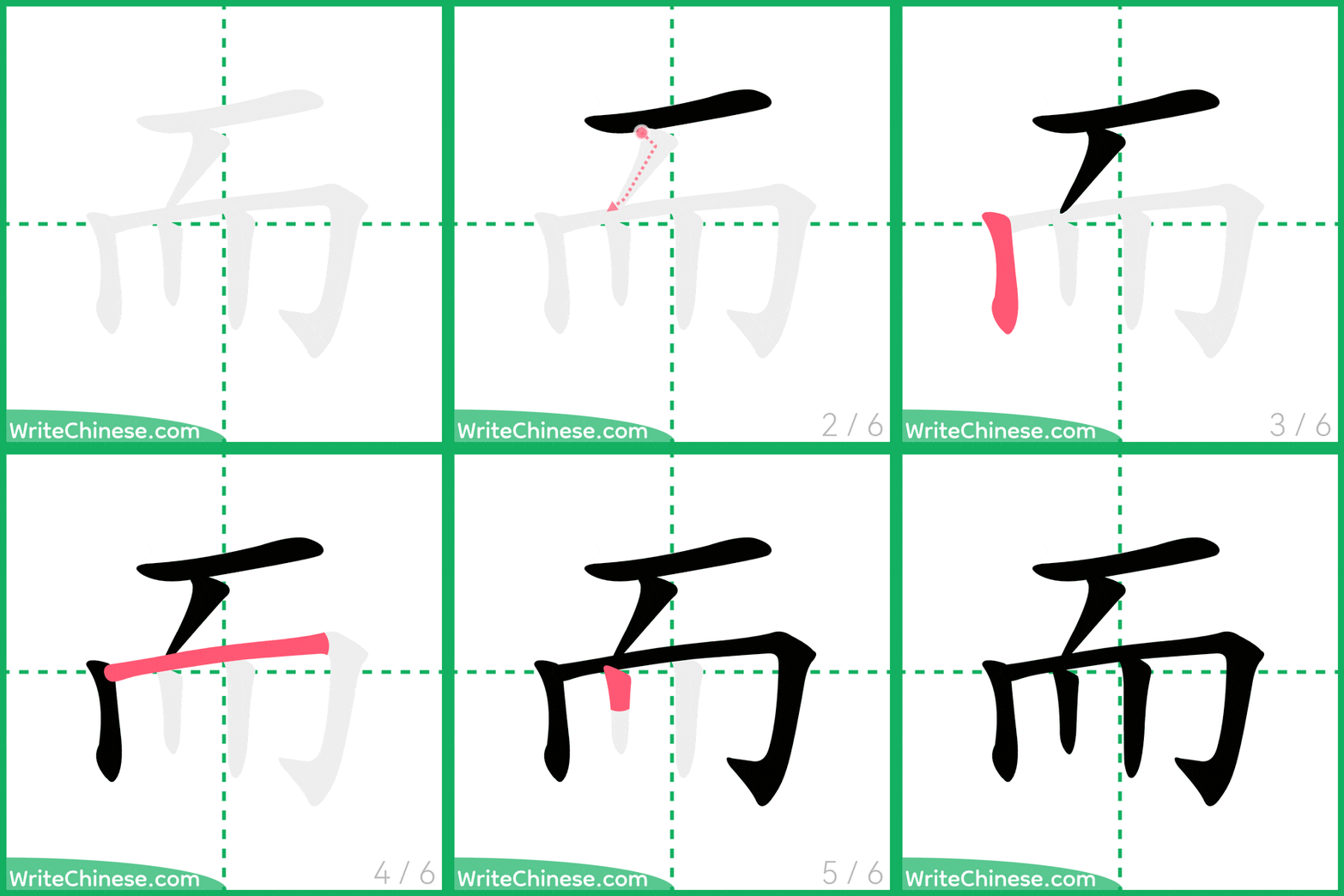
而 stroke order animation

Stroke by Stroke: 而 Writing Order

Master the Chinese character '而' stroke by stroke with visual step-by-step instructions.
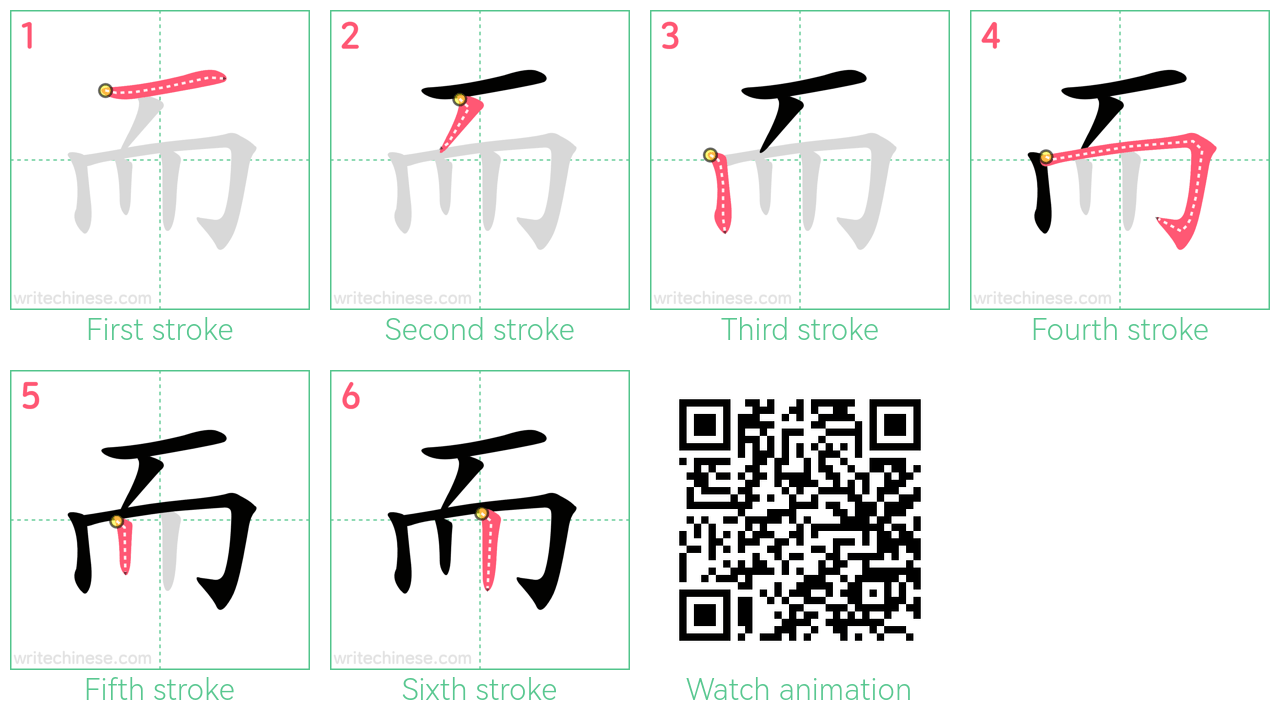
而 step-by-step stroke order diagrams

Follow the Calligraphy Master: Writing '而' Step-by-Step

Learn the proper way to write the Chinese character '而' through a video tutorial with a calligraphy teacher. Follow the Calligraphy Master's Step-by-Step Guide to Write the Chinese Character '而'. You can download the printable handwriting worksheets below and practice writing together with pen and paper.

Free Printable 而 Handwriting Practice Worksheets
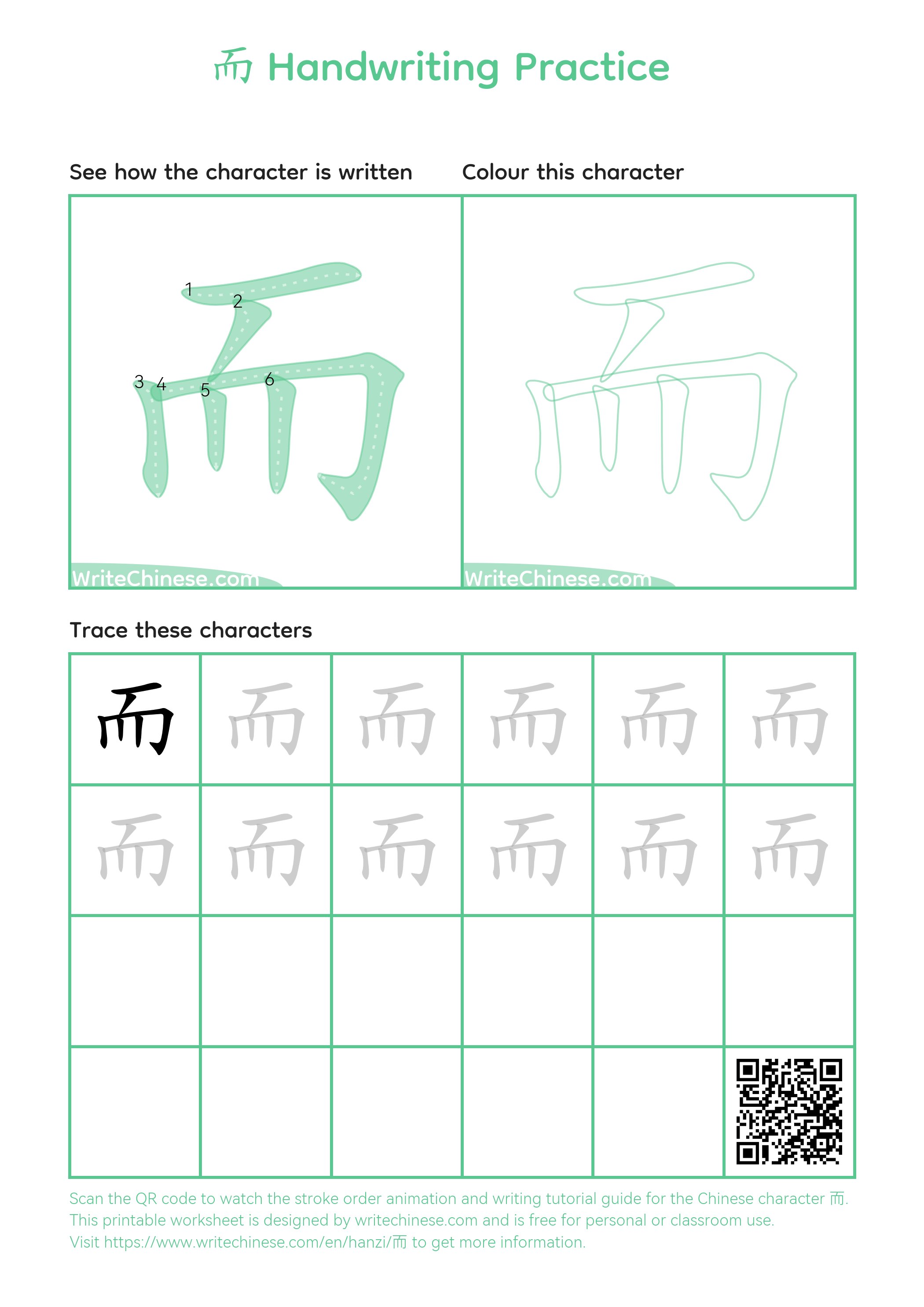
Printable Writing Practice Worksheet of "而"
Printable Handwriting Practice Worksheet of the Chinese character 而
Download the worksheet in PNG format
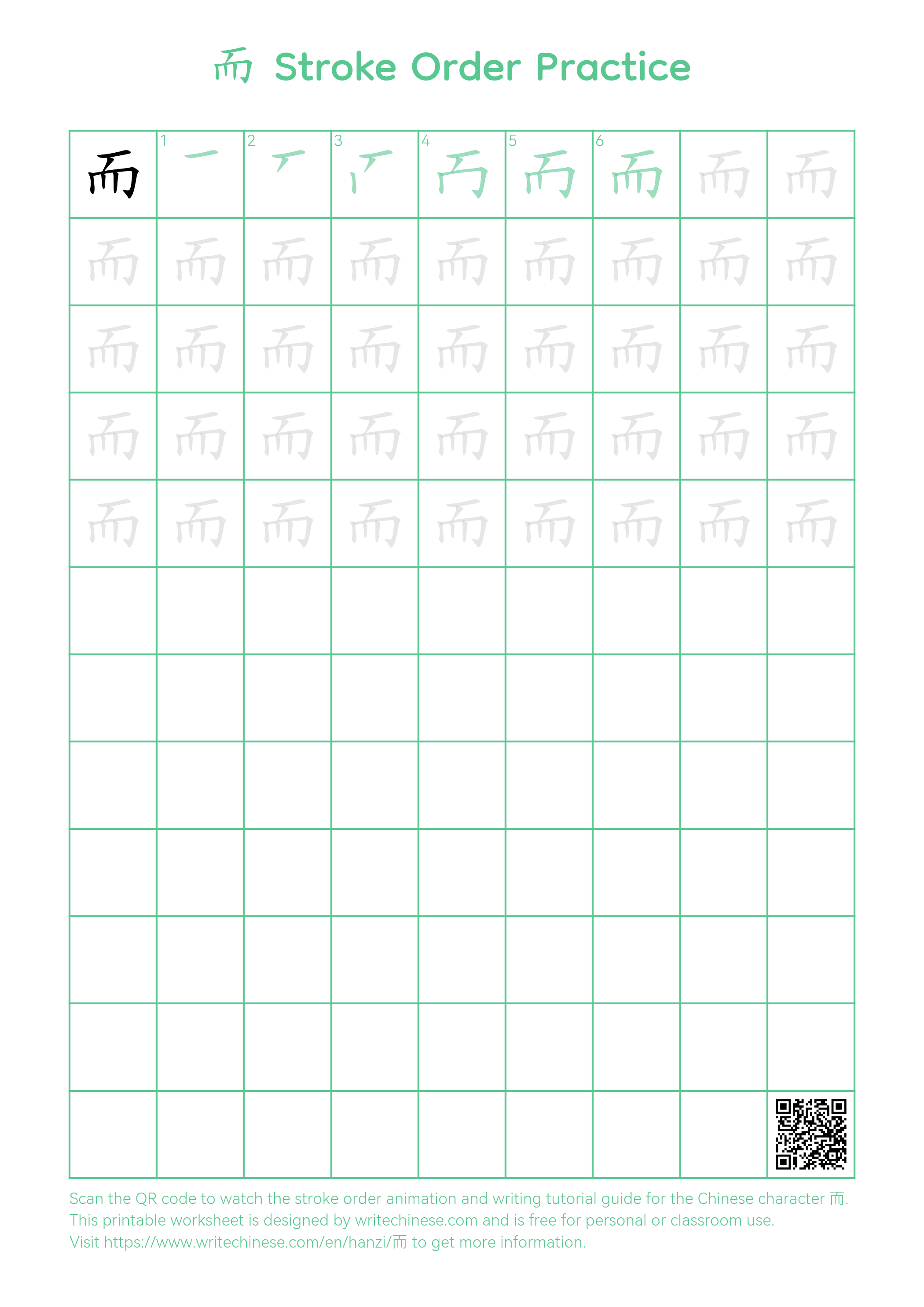
Printable Stroke Order Practice Worksheet of "而"
Printable Stroke Order Practice Worksheet of the Chinese character 而
Download the worksheet in PNG format

Meaning of 而

Pinyin ér
Radical
而
Strokes
6
Definition
and / as well as / but (not) / yet (not) / (shows causal relation) / (shows change of state) / (shows contrast)
Usage
★★★★★
而 (ér) 1. **Pronoun**: Corresponds to "尔", meaning "you" or "your". - Example: 而翁归,自与汝复算耳。 (When the old man returns, we will settle accounts with you again.) 2. **Conjunction**: An ancient term used to connect words, phrases, and clauses, indicating various relationships: a. **Indicating Parallel Relationship**: 多而杂 (many and mixed). b. **Indicating Subsequent Relationship**: 取而代之 (take the place then replace). c. **Indicating Progressive Relationship**: 而且 (and moreover). d. **Indicating Contrastive Relationship**: 似是而非 (seems right but is wrong). e. **Connecting Affirmative and Negative**: 浓而不烈 (strong but not overwhelming). f. **Connecting Adverbial Phrases with Core Terms**: 侃侃而谈 (talk fluent and easy). g. **Inserting in Subject-Predicate for Hypothesis**: 人而无信,不知其可 (If a person lacks trust, one doesn’t know its feasibility). 3. **Showing Range**: 从上而下 (from top to bottom). 4. **Noun**: The character is pictographically representing the shape of bristles (jaw hair). - Example: 而,颊毛也。 (The character "而" represents bristles on the jaws.) 5. **Conjunction Uses**: - (1) Used continuously from ancient times, linking various elements to display complex relations: 如,“君子博学而日参省乎己。” (The gentleman is well-learned and reflects on himself daily.) - (2) Shows progress: 余方心动欲还,而大声发于水上。 (I was moved to return, when suddenly a loud sound came from the water.) - (3) Indicating contrast: 青,取之于蓝,而青于蓝。 (The color blue is derived from indigo, but is bluer than indigo.) - (4) Indicates a hypothetical relationship: 诸君而有意;瞻余马首可也。 (If everyone has intention, they may look towards my horse.) - (5) Connects qualifying/adverbial phrases: 吾恂恂而起。 (I rose gently.) 6. **Alternative Pronouns**: - (1) 你; 你的 (you; your): 余知而无罪也。 (I know and yet I am not guilty.) - (3) 如此 (this): 同是被逼迫,君而妾亦然。 (Both are being forced to do so, you and the concubine as well.) - (4) Another form: 而夫 (this man; that man). 7. **Modal Particles**: - (1) Indicates relationship akin to "of": 虞之与虢,相恃而势。 (The relationship of Yu and Guo relies on each other for power.) - (2) Used with directional terms: 形而上者谓之道。 (That which is beyond form is called the "Dao".) 8. **Rhetorical Question Indication**: - (1) Used in rhetorical questions: 为仁由己,而由人乎哉? (Is not being benevolent up to oneself, but relying on others?) - (2) Atters an emphasis: 已而已而,今之从政者殆而。 (Indeed, the current political leaders are perilous.) 9. **As a Verb**: - (1) Implies similarity: 溺死者千有余人,军惊而坏都舍。 (Over a thousand drowned, the army was alarmed and abandoned the city.) 通“能” (Also reads as "néng") **Noun**: Ability - 然计天下之所以治者,何也?唯而以尚同一义为政故也。 (To govern the world, what matters? Only by upholding the same principles in governance.) **Verb**: - (1) Can; to be able: 不逢汤武与恒缪兮,也孰去而知之? (If not encountering Tang and Wu, who could possibly know?)
吾将上下而求索 wú jiāng shàng xià ér qiú suǒ
I will search up and down
反而 fǎn ér
instead / on the contrary / contrary (to expectations)
一哄而散 yī hòng ér sàn
see 一哄而散[yi1 hong1 er2 san4]
一哄而上 yì hōng ér shàng
Rush up
一哄而起 yī hōng ér qǐ
(of a group of people) to rush into action
不言而喻 bù yán ér yù
it goes without saying / it is self-evident
因而 yīn ér
therefore / as a result / thus / and as a result, ...
因而是 yīn ér shì
Thus
夺眶而出 duó kuàng ér chū
burst into tears / tears started from one's eyes
周而复始 zhōu ér fù shǐ
lit. the cycle comes back to the start (idiom); to move in circles / the wheel comes full circle
娓娓而谈 wěi wěi ér tán
talk familiarly on and on / talk volubly / talk effusively
望而却步 wàng ér què bù
to shrink back / to flinch
不寒而栗 bù hán ér lì
shiver all over though not cold / tremble with fear / shudder
而已 ér yǐ
that's all / nothing more
幸而 xìng ér
by good fortune / luckily
迎刃而解 yíng rèn ér jiě
lit. (bamboo) splits when it meets the knife's edge (idiom) / fig. easily solved
忽而 hū ér
suddenly / now (..., now...)
悬而未决 xuán ér wèi jué
pending a decision / hanging in the balance
慕名而来 mù míng ér lái
to come to a place on account of its reputation (idiom); attracted to visit a famous location
戛然而止 jiá rán ér zhǐ
with a grunting sound it stops (idiom); to come to an end spontaneously (esp. of sound)
扑面而来 pū miàn ér lái
lit. sth hits one in the face / directly in one's face / sth assaults the senses / blatant (advertising) / eye-catching / (a smell) assaults the nostrils
扬长而去 yáng cháng ér qù
to swagger off / to walk off (or drive off etc) without a second thought for those left behind
拂袖而去 fú xiù ér qù
to storm off in a huff (idiom)
拍案而起 pāi àn ér qǐ
lit. to slap the table and stand up (idiom); fig. at the end of one's tether / unable to take it any more
拔地而起 bá dì ér qǐ
rise straight from the ground / rising abruptly out of the ground
一拥而上 yī yōng ér shàng
to swarm around / flocking (to see)
蜂拥而至 fēng yōng ér zhì
come in great numbers
蜂拥而来 fēng yōng ér lái
pour in / come swarming / swarm forward
择善而从 zé shàn ér cóng
to choose the right course and follow it (idiom)
拾级而上 shè jí ér shàng
to walk slowly up a flight of steps (idiom)
一发而不可收拾 yī fà ér bù kě shōu shí
Unmanageable
挺身而出 tǐng shēn ér chū
to step forward bravely
挺而走险 tǐng ér zǒu xiǎn
variant of 鋌而走險|铤而走险[ting3 er2 zou3 xian3]
揭竿而起 jiē gān ér qǐ
bear arms against / raise the standard / rise in revolt
兼而有之 jiān ér yǒu zhī
to have both (at the same time)
擦肩而过 cā jiān ér guò
brief encounter / to brush past sb
擦身而过 cā shēn ér guò
to brush past
故而 gù ér
therefore
敢怒而不敢言 gǎn nù ér bù gǎn yán
angry, but not daring to speak out (idiom); obliged to remain silent about one's resentment / unable to voice objections
敬而远之 jìng ér yuǎn zhī
to show respect from a distance (idiom) / to remain at a respectful distance
显而易见 xiǎn ér yì jiàn
clearly and easy to see (idiom); obviously / clearly / it goes without saying
轻而易举 qīng ér yì jǔ
easy / with no difficulty
而是 ér shì
rather
一概而论 yī gài ér lùn
to lump different matters together (idiom)
死而不僵 sǐ ér bù jiāng
dead but showing no signs of rigor mortis / to die hard (idiom) / to die yet not be vanquished (idiom)
待价而沽 dài jià ér gū
to sell only for a good price (idiom) / to wait for a good offer
喜极而泣 xǐ jí ér qì
crying tears of joy (idiom)
掩面而泣 yǎn miàn ér qì
to bury one's head in one's hands and weep (idiom)
竭泽而渔 jié zé ér yú
lit. to drain the pond to get at the fish (idiom) / fig. to kill the goose that lays the golden eggs
似是而非 sì shì ér fēi
apparently right but actually wrong; specious (idiom)
侃侃而谈 kǎn kǎn ér tán
to speak frankly with assurance
然而 rán ér
however / yet / but
牵一发而动全身 qiān yī fà ér dòng quán shēn
lit. pull one hair and the whole body moves / fig. a slight change will affect everything else / the butterfly effect
甚而 shèn ér
even / so much so that
望而生畏 wàng ér shēng wèi
intimidate at the first glance (idiom); awe-inspiring / terrifying / overwhelming
放之四海而皆准 fàng zhī sì hǎi ér jiē zhǔn
applicable anywhere (idiom)
仅此而已 jǐn cǐ ér yǐ
that's all / just this and nothing more
而今 ér jīn
now / at the present (time)
学而优则仕 xué ér yōu zé shì
one who is successful in one's studies, can become an official (idiom)
王顾左右而言他 wáng gù zuǒ yòu ér yán tā
the king looked left and right and then talked of other things / to digress from the topic of discussion (idiom)
来而不往非礼也 lái ér bù wǎng fēi lǐ yě
not to reciprocate is against etiquette (classical) / to respond in kind
不约而同 bù yuē ér tóng
to agree by chance (idiom); taking the same action without prior consultation
继而 jì ér
then / afterwards
不胫而走 bù jìng ér zǒu
to get round fast / to spread like wildfire
铩羽而归 shā yǔ ér guī
to return in low spirits following a defeat or failure to achieve one's ambitions (idiom)
不翼而飞 bù yì ér fēi
to disappear without trace / to vanish all of a sudden / to spread fast / to spread like wildfire
进而 jìn ér
and then (what follows next)
而言 ér yán
with regard to (preceding phrase)
而后 ér hòu
after that / then
而论 ér lùn
And on
而立 ér lì
thirty years of age
转而 zhuǎn ér
to turn to (sth else) / to switch to
自然而然 zì rán ér rán
involuntary / automatically
可想而知 kě xiǎng ér zhī
it is obvious that... / as one can well imagine...
时而 shí ér
occasionally / from time to time
脱口而出 tuō kǒu ér chū
to blurt out / to let slip (an indiscreet remark)
脱颖而出 tuō yǐng ér chū
to reveal one's talent (idiom) / to rise above others / to distinguish oneself
腾空而起 téng kōng ér qǐ
commence business / rise in the world by sheer effort and persistence
久而久之 jiǔ ér jiǔ zhī
over time / as time passes / in the fullness of time
从而 cóng ér
thus / thereby
蜂拥而上 fēng yōng ér shàng
rush on like a swarm of hornets / like bees pressing forward in swarms -- a crowd pressing on / (The crowds) surged forward (to shake hands with sb.).
投袂而起 tóu mèi ér qǐ
lit. to shake one's sleeves and rise (idiom) / fig. to get excited and move to action
接踵而来 jiē zhǒng ér lái
to come one after the other
一蹴而就 yī cù ér jiù
to get there in one step (idiom); easily done / success at a stroke / to get results overnight
而且 ér qiě
(not only ...) but also / moreover / in addition / furthermore
鱼贯而入 yú guàn ér rù
to walk in in a line
趁虚而入 chèn xū ér rù
avail oneself of the opportunity to get in
一跃而起 yī yuè ér qǐ
to jump up suddenly / to bound up / to rise up in one bound
接踵而至 jiē zhǒng ér zhì
come one after another
不辞而别 bù cí ér bié
to leave without saying good-bye
迎面而来 yíng miàn ér lái
directly / head-on (collision) / in one's face (of wind)
无功而返 wú gōng ér fǎn
to return without any achievement (idiom); to go home with one's tail between one's legs
半途而废 bàn tú ér fèi
to give up halfway (idiom); leave sth unfinished
随风而逝 suí fēng ér shì
gone with the wind
铤而走险 tǐng ér zǒu xiǎn
to take a risk out of desperation (idiom)
锲而不舍 qiè ér bù shě
to chip away at a task and not abandon it (idiom); to chisel away at sth / to persevere / unflagging efforts
一闪而过 yī shǎn ér guò
to flash past / to flit by
乘隙而入 chéng xì ér rù
take advantage of the crack and enter / get in through the crack / seize the opportunity and enter
背道而驰 bèi dào ér chí
to run in the opposite direction (idiom); to run counter to
鼎足而立 dǐng zú ér lì
standing like a tripod -- a tripartite balance of forces

Same Pronunciation Characters

Same Radical Characters

Easier Access

No need to remember the website address or type any Chinese characters. Simply scan the QR code for easier access to this page. Alternatively, you can quickly access this page by clicking to copy and paste the URL.
Input Method for 而
Pinyin er2
Wubi
dmjj
Cangjie
mbll
Zhengma
gl
Four Corner
10227
Unicode
U+800c
Stroke Number Category
HSK Level Category
More Languages

All Chinese stroke order images, animations, videos, and printable worksheets on this website are free for personal or classroom use. Please indicate the source and URL of the website when using them.

本网站上所有的汉字笔顺图片、动画、视频和可打印的练习材料,免费供个人或课堂使用。使用时请署名并标注引用网址。