search
Learn How to Write Chinese Characters (Hanzi)
Search Chinese characters via handwriting

How to write 无

Animated Stroke Order of 无

Learn to write the Chinese character "无" by watching the stroke order animation of "无".
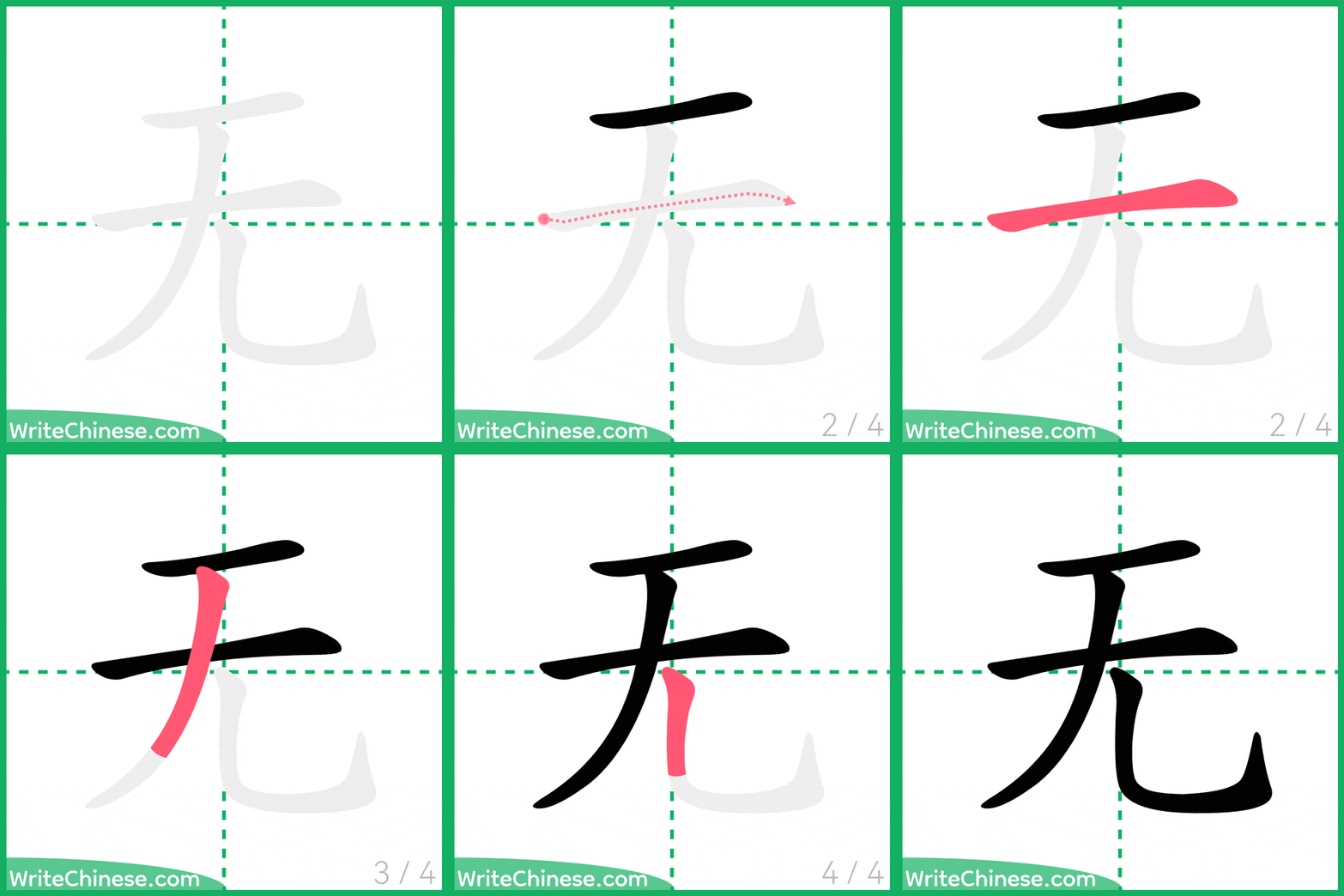
无 stroke order animation

Stroke by Stroke: 无 Writing Order

Master the Chinese character '无' stroke by stroke with visual step-by-step instructions.
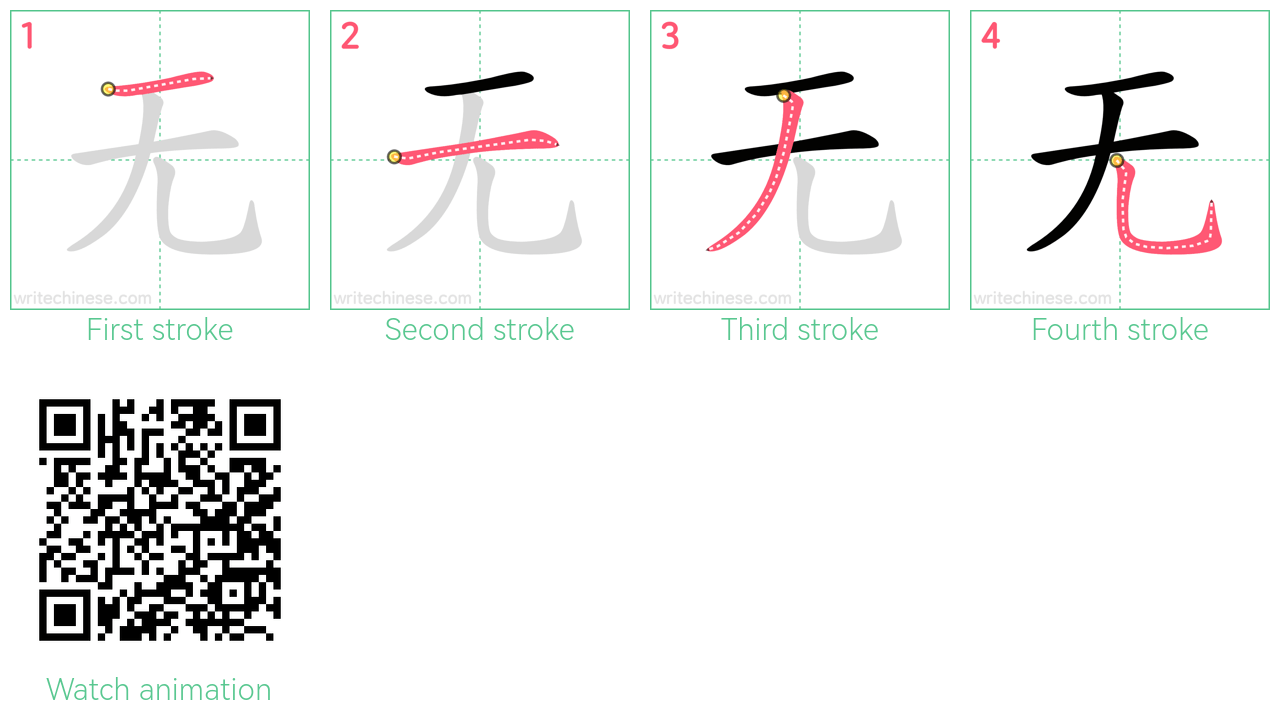
无 step-by-step stroke order diagrams

Follow the Calligraphy Master: Writing '无' Step-by-Step

Learn the proper way to write the Chinese character '无' through a video tutorial with a calligraphy teacher. Follow the Calligraphy Master's Step-by-Step Guide to Write the Chinese Character '无'. You can download the printable handwriting worksheets below and practice writing together with pen and paper.

Free Printable 无 Handwriting Practice Worksheets
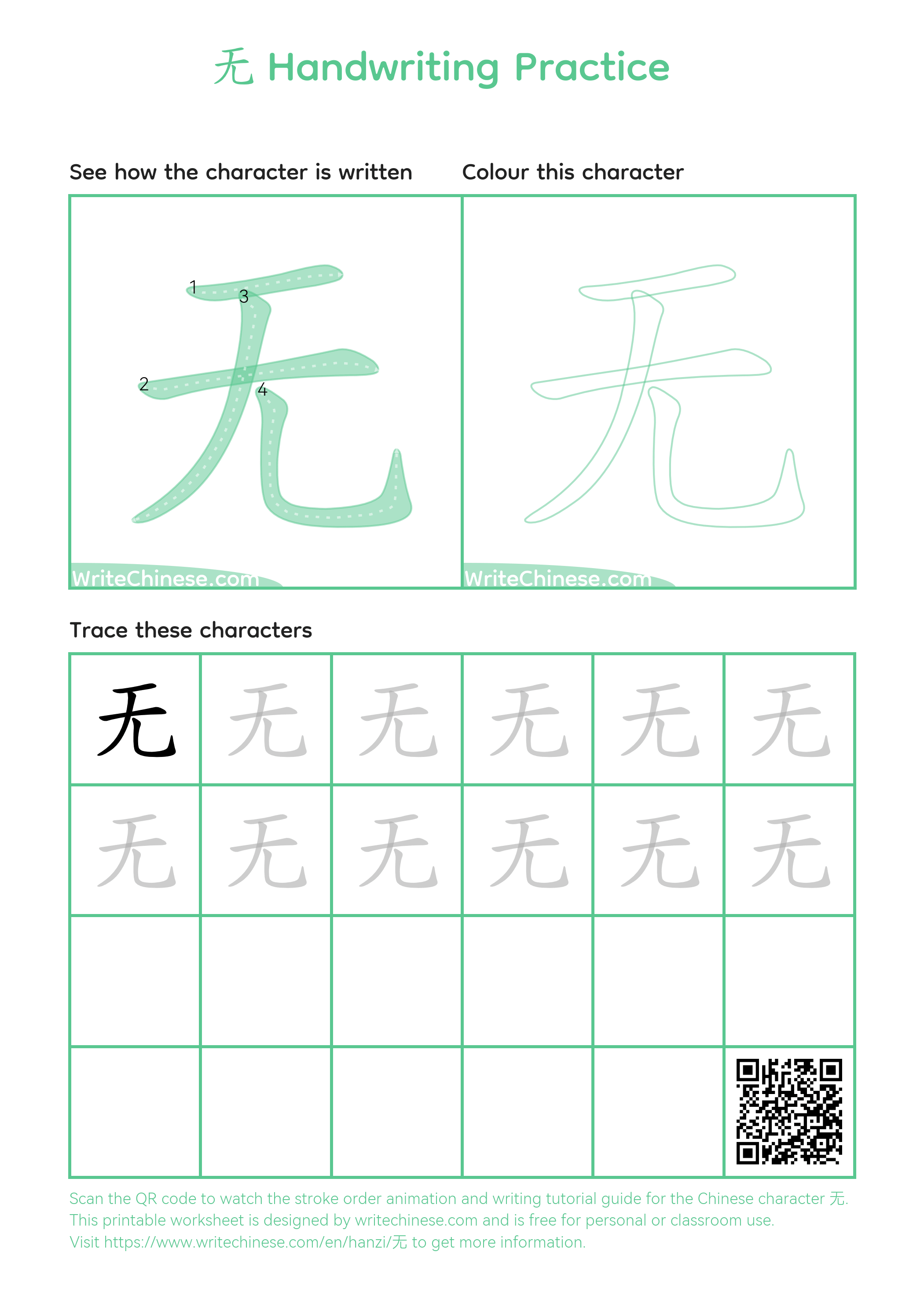
Printable Writing Practice Worksheet of "无"
Printable Handwriting Practice Worksheet of the Chinese character 无
Download the worksheet in PNG format
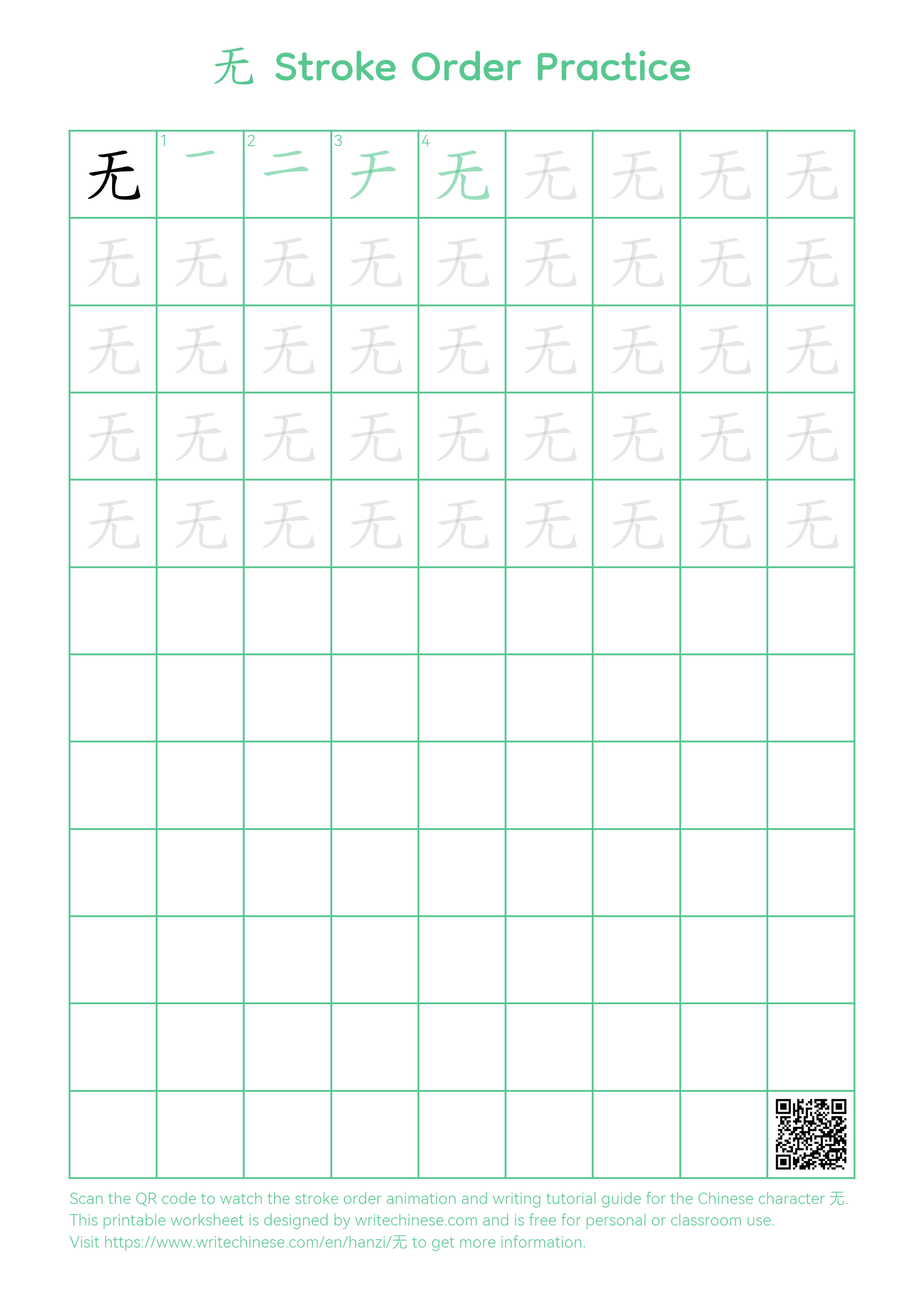
Printable Stroke Order Practice Worksheet of "无"
Printable Stroke Order Practice Worksheet of the Chinese character 无
Download the worksheet in PNG format

Meaning of 无

Pinyin wú、 mó
Radical
一
Strokes
4
Definition
-less / not to have / no / none / not / to lack / un-
Usage
★★★★★
无 wú 1. Meaning: Not have; the opposite of "有" (have); none. Example: 无辜 (innocent); 无偿 (without compensation); 无从 (no way to do something); 无度 (limitless); 无端 (unprovoked); 无方 (unmethodical, opposite of 有方); 无非 (only); 无动于衷 (indifferent); 无所适从 (no basis to follow). 2. Existential (verb): Indicates absence (English: not have; there is not). Example: 无 (wú) signifies lack in various contexts, e.g., "无颜落色" (to lose color, expressionless) or "无头面" (at a loss). 3. Negation (adverb): Used to indicate negation for verbs or adjectives (English: not). Example: 君子食无求饱 (The gentleman seeks not for fullness in meals). 4. Prohibition (adverb): Used to advise or prohibit actions, can be translated as "don't" or "not." Example: 请无攻宋 (Please do not attack Song). 5. Non-existence (adverb): Indicating something has not happened (English: no, not). Example: 没有情况 (no situation). 6. Uncertainty (pronoun): Refers to unspecified people, matters, time, or places (English: nothing). Example: 无如 (nothing like), 无一 (not a single one). 7. Regardless (conjunction): Indicates the same situation applies under any condition, equivalent to "no matter." Example: 无论好坏 (regardless of good or bad). 8. Question marker: Used at the end of questions to imply doubt, can be translated as "is it?" Example: 能饮一杯无? (Can you drink a cup?) 9. In the phrase "南无" (námó): A Buddhist term showing respect for the Buddha. 10. 另见 (see also): "无" has various implications and uses across different contexts, including philosophical interpretations of emptiness and the concept of nihility.
回味无穷 huí wèi wú qióng
leaving a rich aftertaste / (fig.) memorable / lingering in memory
无可 wú kě
can't
无病呻吟 wú bìng shēn yín
to moan about imaginary illness / fussing like a hypochondriac / fig. sentimental nonsense
无可否认 wú kě fóu rèn
There is no denying it. / It cannot be denied that ... / It is not to be denied that... / There is no denying.
无可厚非 wú kě hòu fēi
see 未可厚非[wei4 ke3 hou4 fei1]
哑口无言 yǎ kǒu wú yán
dumbstruck and unable to reply (idiom); left speechless / at a loss for words
无垠 wú yín
boundless / vast
无奈 wú nài
helpless / without choice / for lack of better option / grudgingly / willy-nilly / nolens volens / abbr. for 無可奈何|无可奈何[wu2 ke3 nai4 he2]
广阔无垠 guǎng kuò wú yín
unmeasured vastness / great distance
一望无垠 yī wàng wú yín
to stretch as far as the eye can see (idiom)
浩瀚无垠 hào hàn wú yín
Immense
无声 wú shēng
noiseless / noiselessly / silent
万般无奈 wàn bān wú nài
to have no way out / to have no alternative
出于无奈 chū yú wú nài
reluctantly / out of helplessness
百般无奈 bǎi bān wú nài
Helpless
无奈何 wú nài hé
Helpless
无私奉献 wú sī fèng xiàn
selfless contribution / selfless dedication
无妄之灾 wú wàng zhī zāi
an accident / an undeserved catastrophe / unexpected calamities
无妨 wú fáng
no harm (in doing it) / One might as well. / It won't hurt. / no matter / it's no bother
无孔不入 wú kǒng bù rù
get in by every opening / be all-pervasive / have a finger in every pie
卑鄙无耻 bēi bǐ wú chǐ
mean and having no sense of shame
无名小卒 wú míng xiǎo zú
insignificant soldier (idiom) / a nobody / nonentity
厉无畏 lì wú wèi
Li Wuwei
贪得无厌 tān dé wú yàn
avaricious and insatiable (idiom); greedy and never satisfied
无则加勉 wú zé jiā miǎn
No
孤立无援 gū lì wú yuán
isolated and without help
孰能无过 shú néng wú guò
Can't fail
完好无损 wán hǎo wú sǔn
in good condition / undamaged / intact
寂无人声 jì wú rén shēng
Silence
寥寥无几 liáo liáo wú jǐ
just a very few (idiom); tiny number / not many at all / You count them on your fingers.
手无寸铁 shǒu wú cùn tiě
lit. not an inch of steel (idiom); unarmed and defenseless
万寿无疆 wàn shòu wú jiāng
may you enjoy boundless longevity (idiom) / long may you live
无尘 wú chén
dust-free
尚无 shàng wú
not yet / not so far
无耻之尤 wú chǐ zhī yóu
be utterly contemptible / most shameless of all / brazen in the extreme
无尽 wú jìn
endless / inexhaustible
无崖子 wú yá zi
No cliff
事无巨细 shì wú jù xì
lit. things are not separated according to their size (idiom) / fig. to deal with any matter, regardless of its importance
无恙 wú yàng
in good health
无序 wú xù
disorderly / irregular / lack of order
无庸 wú yōng
variant of 毋庸[wu2 yong1]
无异 wú yì
nothing other than / to differ in no way from / the same as / to amount to
无异于 wú yì yú
be tantamount to / nothing else but
无影无踪 wú yǐng wú zōng
to disappear without trace (idiom)
无可挑剔 wú kě tiāo tī
excellent in every respect / flawless
所剩无几 suǒ shèng wú jǐ
there is not much left
童叟无欺 tóng sǒu wú qī
cheating neither old nor young (idiom); treating youngsters and old folk equally scrupulously / Our house offers sincere treatment to all and fair trade to old and young alike.
无期徒刑 wú qī tú xíng
life imprisonment
肆无忌惮 sì wú jì dàn
absolutely unrestrained / unbridled / without the slightest scruple
毫无顾忌 háo wú gù jì
without scruple / stop at nothing / of no scruples
无所顾忌 wú suǒ gù jì
unscrupulously
横行无忌 héng xíng wú jì
run amuck / run wild
忍无可忍 rěn wú kě rěn
more than one can bear (idiom); at the end of one's patience / the last straw
无忧 wú yōu
carefree / worry-free / without worry
无忧无虑 wú yōu wú lǜ
carefree and without worries (idiom)
高枕无忧 gāo zhěn wú yōu
to sleep peacefully (idiom) / (fig.) to rest easy / to be free of worries
无怨无悔 wú yuàn wú huǐ
no complaints / to have no regrets
有恃无恐 yǒu shì wú kǒng
secure in the knowledge that one has backing
无心恋战 wú xīn liàn zhàn
have no desire to continue fighting / have no heart for further fighting
安然无恙 ān rán wú yàng
safe and sound (idiom) / to come out unscathed (e.g. from an accident or illness)
别来无恙 bié lái wú yàng
(literary) I trust you have been well since we last met
平安无恙 píng ān wú yàng
safe and sound
悄无声息 qiǎo wú shēng xī
quietly / noiselessly
悄然无声 qiǎo rán wú shēng
absolutely quiet
无悔 wú huǐ
to have no regrets
后患无穷 hòu huàn wú qióng
it will cause no end of trouble (idiom)
无所畏惧 wú suǒ wèi jù
fearless / have iron nerves / have nerves of steel
无惧 wú jù
fearless / dauntless / bold
无所忌惮 wú suǒ jì dàn
without restraint / stick at nothing
愚昧无知 yú mèi wú zhī
stupid and ignorant (idiom)
当之无愧 dāng zhī wú kuì
fully deserving, without any reservations (idiom); entirely worthy (of a title, honor etc)
无愧 wú kuì
to have a clear conscience / to feel no qualms
问心无愧 wèn xīn wú kuì
lit. look into one's heart, no shame (idiom); with a clear conscience
无愧于 wú kuì yú
live up to / worthy
无愧于心 wú kuì yú xīn
have a clear conscience
无憾 wú hàn
No regrets
不无遗憾 bù wú yí hàn
No regrets
无懈可击 wú xiè kě jī
invulnerable
无拘无束 wú jū wú shù
free and unconstrained (idiom); unfettered / unbuttoned / without care or worries
无可比拟 wú kě bǐ nì
beyond comparison / beyond compare
别无选择 bié wú xuǎn zé
to have no other choice
无可挽回 wú kě wǎn huí
irrevocable / the die is cast
无损 wú sǔn
lossless / undamage / without prejudice
无法 wú fǎ
unable / incapable
手足无措 shǒu zú wú cuò
at a loss to know what to do (idiom); bewildered
无措 wú cuò
helpless
茫然无措 máng rán wú cuò
petrify / be at one's wits' end / be all at sea
口说无凭 kǒu shuō wú píng
(idiom) you can't rely on a verbal agreement / just because sb says sth, doesn't mean it's true
空口无凭 kōng kǒu wú píng
mere verbal statement cannot be taken as proof (idiom)
无关 wú guān
unrelated / having nothing to do (with sth else)
无冕之王 wú miǎn zhī wáng
an uncrowned king a journalist
无坚不摧 wú jiān bù cuī
no stronghold one cannot overcome (idiom); to conquer every obstacle / nothing one can't do / to carry everything before one
无效 wú xiào
not valid / ineffective / in vain
杳无音信 yǎo wú yīn xìn
to have no news whatever
无敌 wú dí
unequalled / without rival / a paragon
无数 wú shù
countless / numberless / innumerable
无计可施 wú jì kě shī
no strategy left to try (idiom); at one's wit's end / at the end of one's tether / powerless
责无旁贷 zé wú páng dài
to be duty bound / to be one's unshirkable responsibility
旁若无人 páng ruò wú rén
to act as though there were nobody else present / unselfconscious / fig. without regard for others
无论 wú lùn
no matter what or how / regardless of whether...

Same Pronunciation Characters

Same Radical Characters

Easier Access
No need to remember the website address or type any Chinese characters. Simply scan the QR code for easier access to this page. Alternatively, you can quickly access this page by clicking to copy and paste the URL.
Input Method for 无
Pinyin wu2
Wubi
fqv
Cangjie
mku
Zhengma
agr
Four Corner
10412
Unicode
U+65e0
Stroke Number Category
HSK Level Category
More Languages

All Chinese stroke order images, animations, videos, and printable worksheets on this website are free for personal or classroom use. Please indicate the source and URL of the website when using them.

本网站上所有的汉字笔顺图片、动画、视频和可打印的练习材料,免费供个人或课堂使用。使用时请署名并标注引用网址。