search
Learn How to Write Chinese Characters (Hanzi)
Search Chinese characters via handwriting

How to write 起

Animated Stroke Order of 起

Learn to write the Chinese character "起" by watching the stroke order animation of "起".
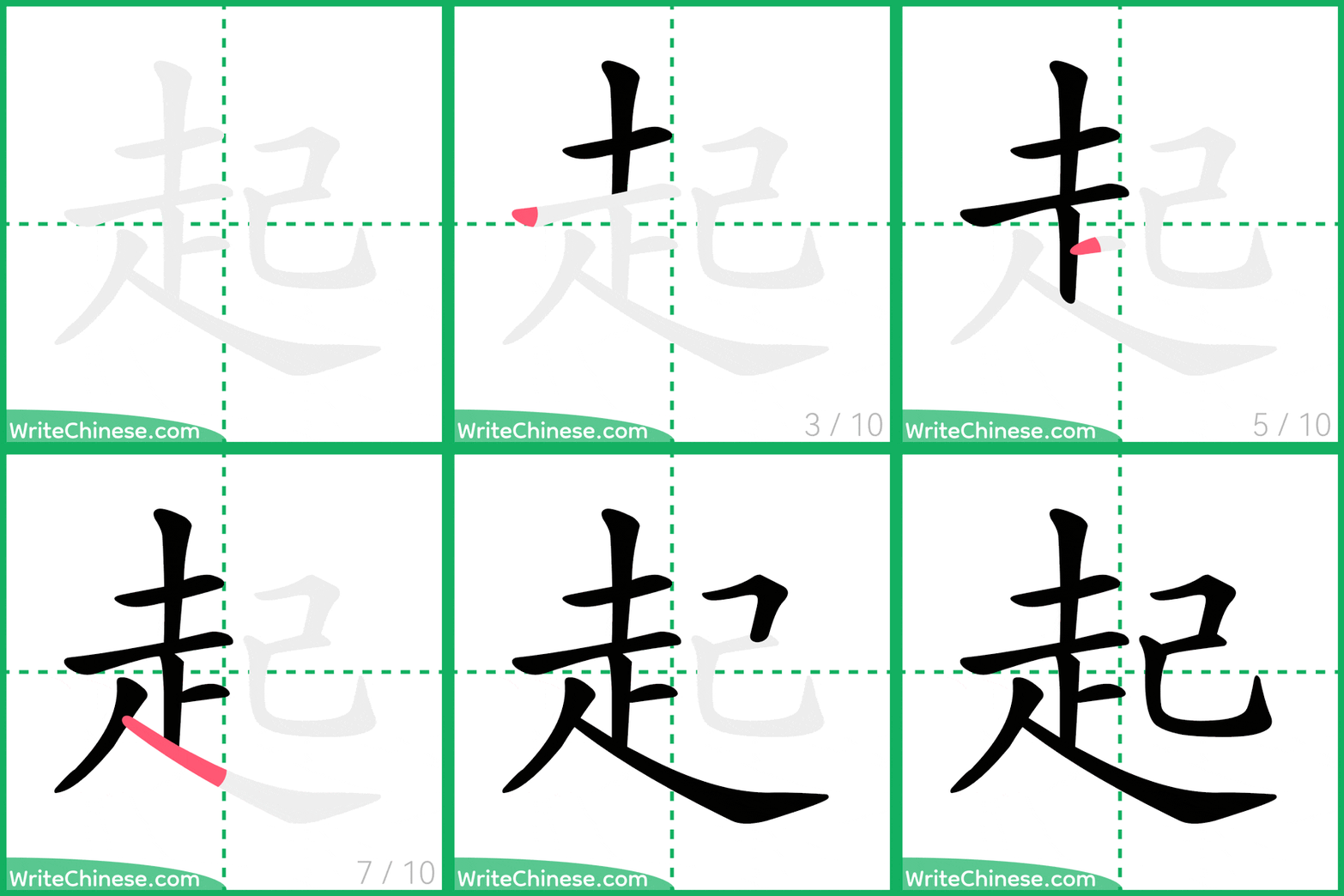
起 stroke order animation

Stroke by Stroke: 起 Writing Order

Master the Chinese character '起' stroke by stroke with visual step-by-step instructions.
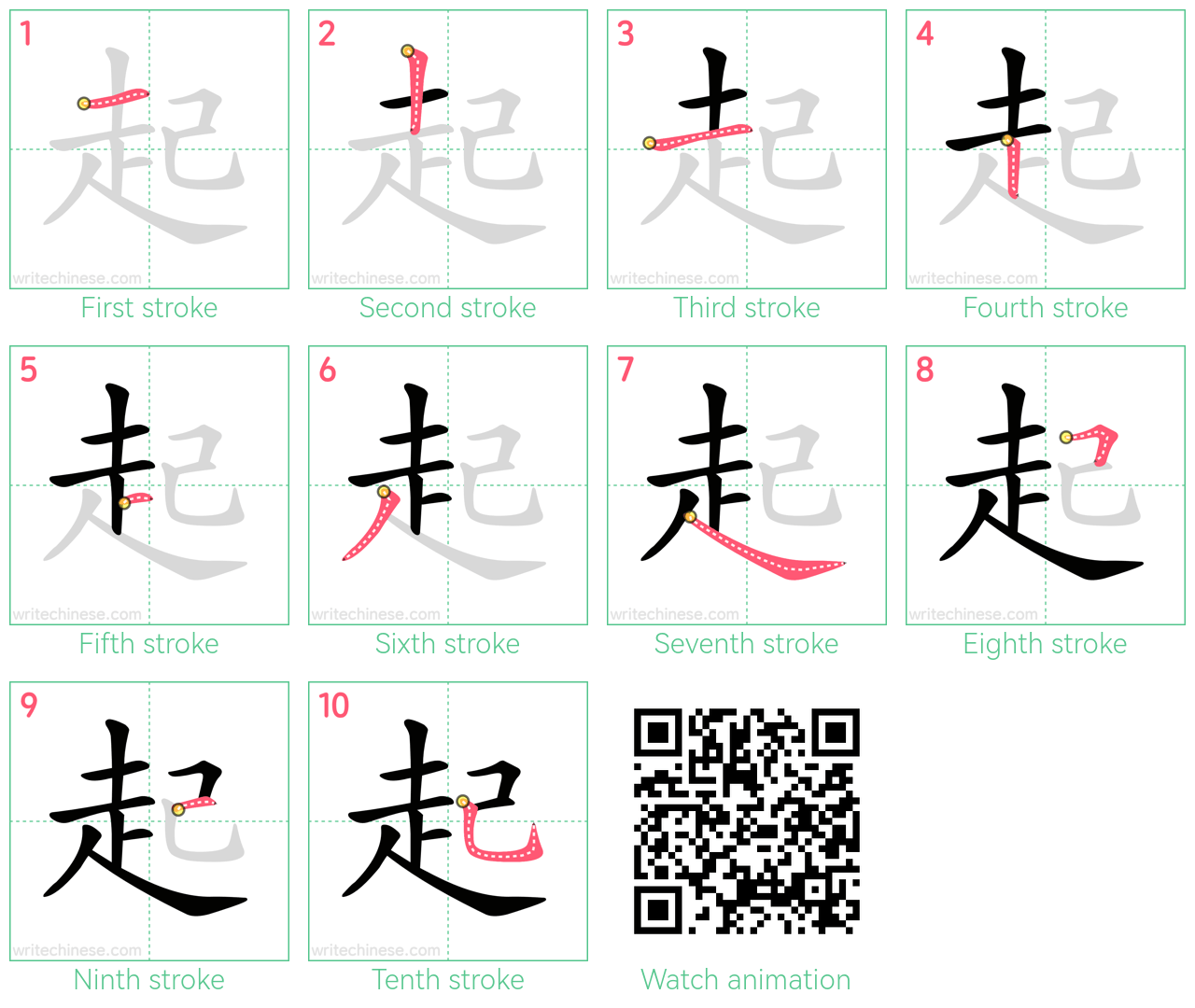
起 step-by-step stroke order diagrams

Follow the Calligraphy Master: Writing '起' Step-by-Step

Learn the proper way to write the Chinese character '起' through a video tutorial with a calligraphy teacher. Follow the Calligraphy Master's Step-by-Step Guide to Write the Chinese Character '起'. You can download the printable handwriting worksheets below and practice writing together with pen and paper.

Free Printable 起 Handwriting Practice Worksheets
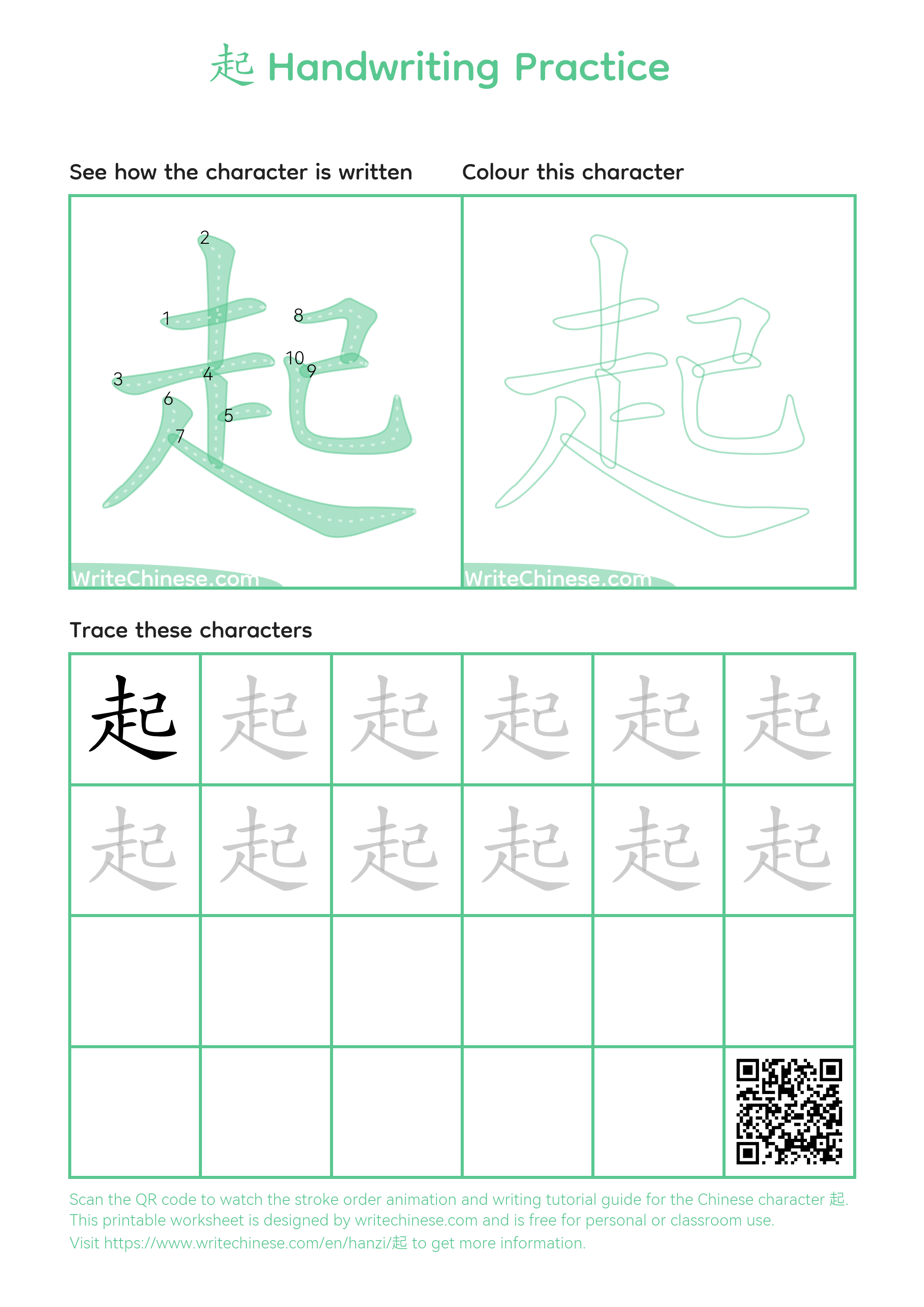
Printable Writing Practice Worksheet of "起"
Printable Handwriting Practice Worksheet of the Chinese character 起
Download the worksheet in PNG format
Printable Stroke Order Practice Worksheet of "起"
Printable Stroke Order Practice Worksheet of the Chinese character 起
Download the worksheet in PNG format

Meaning of 起

Pinyin qǐ
Radical
走
Strokes
10
Definition
to rise / to raise / to get up
Usage
★★★★★
起 [qǐ] 〈动〉 【本义】: 由躺而坐;由坐而立 1. 动词同本义 (stand up) 2. 起床 (get up; get out of bed) 3. 产生;发生 (produce; happen; take place) 4. 开始;开端 (start; begin) 5. 源起;起因于 (cause; origin) 6. 治愈;病愈。亦谓复苏 (cure) 7. 起身,动起来,采取行动 (start) 8. 起义,起事,闹事 (insurgence; rise in rebellion) 9. 隆起,凸起,耸立 (protruding) 10. 草拟 (draw up) 11. 使疏松 (loosen) 12. 扶持 (help sustain) 13. 取 (证件、书信等) (get) 14. 兴建;建造 (build; construct) 15. 征收;征召 (levy; collect; call up) 16. 使死者复活 (bring back to life) 17. 举用 (employ) 18. 启发 (arouse) 19. 离开;除去 (remove; leave the original position) 20. 开启,张开 (open) 21. 搬运 (carry) 22. 出身 (be born of; come from) 〈量〉 1. 群;组 (group; lot) 2. 批 (batch) 3. 次,回 (time) 4. 病例;案例 (case; instance) 〈介〉 在时间或地点词前,表示始点,相当于“从”、“自”、“由” (from). 如: 起这儿剪下来; 我起北京来 〈副〉 1. 用在动词后作为补足语,表示动作的向上方向 (used as a complement after a verb indicating the upward direction) 2. 用在动词后,常与“不”、“得”连用,表示能或不能经受住,够或不够标准 (used after a verb together with “得” or “不” as meaning ‘can afford’ or ‘cannot afford’)
吊起 diào qǐ
to hoist
起吊 qǐ diào
sling / crane
唤起 huàn qǐ
to waken (to action) / to rouse (the masses) / to evoke (attention, recollection etc)
一波又起 yī bō yòu qǐ
Wave after wave
另起炉灶 lìng qǐ lú zào
lit. to set up a separate kitchen (idiom); to start from scratch / back to square one / to start of on a new path
一哄而起 yī hōng ér qǐ
(of a group of people) to rush into action
响起 xiǎng qǐ
ring out / to sound
唱起 chàng qǐ
Sing
起因 qǐ yīn
cause / a factor (leading to an effect)
平起平坐 píng qǐ píng zuò
to be on an equal footing
奋起 fèn qǐ
to rise vigorously / a spirited start
起始 qǐ shǐ
to originate
崛起 jué qǐ
to rise abruptly (to a towering position) / to tower over / to spring up / to emerge suddenly / the emergence (e.g. of a power)
起哄 qǐ hòng
to heckle / rowdy jeering / to create a disturbance
卧床不起 wò chuáng bù qǐ
be completely bedridden / remain in bed / take to one's bed and be likely to die
卷起 juǎn qǐ
to roll up / to curl up / (of dust etc) to swirl up
勃起 bó qǐ
erection / to have an erection
升起 shēng qǐ
to raise / to hoist / to rise
起伏跌宕 qǐ fú diē dàng
Ups and downs
起居 qǐ jū
everyday life / regular pattern of life
引起 yǐn qǐ
to give rise to / to lead to / to cause / to arouse
黄巢起义 Huáng Cháo qǐ yì
Huang Chao peasant uprising 875-884 in late Tang, led by Huang Chao
起床 qǐ chuáng
to get out of bed / to get up
此起彼落 cǐ qǐ bǐ luò
to rise and fall in succession (idiom) / repeating continuously
此伏彼起 cǐ fú bǐ qǐ
see 此起彼伏[ci3 qi3 bi3 fu2]
起劲 qǐ jìn
vigorously / energetically / enthusiastically
凸起 tū qǐ
convex / protruding / to protrude / to bulge / to buckle upwards
起初 qǐ chū
originally / at first / at the outset
忆起 yì qǐ
remember / recall / call to mind
想起 xiǎng qǐ
to recall / to think of / to call to mind
惹不起 rě bu qǐ
can't afford to offend / dare not provoke / difficult to deal with / insufferable
掀起 xiān qǐ
to lift / to raise in height / to begin / upsurge / to set off (a campaign)
扬起 yáng qǐ
to raise one's head / to perk up
抓起 zhuā qǐ
snatch up
抬起 tái qǐ
to lift up
拍案而起 pāi àn ér qǐ
lit. to slap the table and stand up (idiom); fig. at the end of one's tether / unable to take it any more
拔地而起 bá dì ér qǐ
rise straight from the ground / rising abruptly out of the ground
挑起 tiǎo qǐ
to provoke / to stir up / to incite
挺起 tǐng qǐ
throw out / elevation
提起 tí qǐ
to mention / to speak of / to lift / to pick up / to arouse / to raise (a topic, a heavy weight, one's fist, one's spirits etc)
揭竿而起 jiē gān ér qǐ
bear arms against / raise the standard / rise in revolt
起搏 qǐ bó
pace-making
搞起 gǎo qǐ
Get up
兔起鹘落 tù qǐ hú luò
quick flow of writer's thoughts and imagination
兴起 xīng qǐ
to rise / to spring up / to burgeon / to be aroused / to come into vogue
起兵 qǐ bīng
Raise troops
再起 zài qǐ
to arise again / to make a comeback / resurgence
携起手来 xié qǐ shǒu lái
Join hands
起来 qǐ lai
to stand up / to get up / also pr. [qi3 lai2]
肃然起敬 sù rán qǐ jìng
to feel deep veneration for sb (idiom)
昂起 áng qǐ
Uplift
武昌起义 Wǔ chāng Qǐ yì
Wuchang Uprising of October 10th, 1911, which led to Sun Yat-sen's Xinhai Revolution and the fall of the Qing dynasty
架起 jià qǐ
set up
做起 zuò qǐ
Start
比起 bǐ qǐ
compared with
泛起 fàn qǐ
to appear / to emerge / to surface
起泡 qǐ pào
to bubble / to foam / to blister / to sprout boils (on one's body) / sparkling (wine etc)
涌起 yǒng qǐ
to well up / to boil out / to bubble forth / to spurt
风起云涌 fēng qǐ yún yǒng
to surge like a gathering storm (idiom) / to grow by leaps and bounds
起源 qǐ yuán
origin / to originate / to come from
激起 jī qǐ
to arouse / to evoke / to cause / to stir up
起点 qǐ diǎn
starting point
仰卧起坐 yǎng wò qǐ zuò
sit-up (physical exercise)
此起彼伏 cǐ qǐ bǐ fú
up here, down there (idiom); to rise and fall in succession / no sooner one subsides, the next arises / repeating continuously / occurring again and again (of applause, fires, waves, protests, conflicts, uprisings etc)
思潮起伏 sī cháo qǐ fú
thoughts surging in one's mind (idiom) / different thoughts coming to mind
跌宕起伏 diē dàng qǐ fú
ups and downs
燃起 rán qǐ
to ignite / to light / fig. to spark off (hopes, controversy, flames of revolution)
起爆 qǐ bào
to explode / to set off an explosion / to detonate
起疑 qǐ yí
suspect
盖起 gài qǐ
Cover up
瞧不起 qiáo bù qǐ
to look down upon / to hold in contempt
瞧得起 qiáo de qǐ
think much of / have high regard for / look up to / see much in
起码 qǐ mǎ
at the minimum / at the very least
最起码 zuì qǐ mǎ
at least
竖起 shù qǐ
to erect (a tent etc) / to prick up (one's ears) / to raise (one's eyebrows) / to stick up (one's thumb) / to turn up (one's collar) / (of a bird) to puff up (one's feathers)
后起之秀 hòu qǐ zhī xiù
an up-and-coming youngster / new talent / a brilliant younger generation
秋收起义 Qiū shōu Qǐ yì
Autumn Harvest Uprising (1927), insurrection in Hunan and Jiangxi provinces led by Mao Zedong
买不起 mǎi bu qǐ
cannot afford / can't afford buying
了不起 liǎo bu qǐ
amazing / terrific / extraordinary
突起 tū qǐ
to appear suddenly / projection / bit sticking out
翩翩起舞 piān piān qǐ wǔ
(to start) dancing lightly and gracefully
腾起 téng qǐ
spring
腾空而起 téng kōng ér qǐ
commence business / rise in the world by sheer effort and persistence
起义 qǐ yì
uprising / insurrection / revolt
起义军 qǐ yì jūn
insurrectionary army
起伏 qǐ fú
to move up and down / to undulate / ups and downs
一起 yī qǐ
in the same place / together / with / altogether (in total)
起草 qǐ cǎo
to make a draft / to draw up (plans)
祸起萧墙 huò qǐ xiāo qiáng
Troubles start inside the house. / There is internal strife afoot. / Trouble breaks out at home. / Troubles come within one's family -- internecine feud.
蜂起 fēng qǐ
to swarm / to rise in masses
起讫 qǐ qì
beginning and end (dates)
投袂而起 tóu mèi ér qǐ
lit. to shake one's sleeves and rise (idiom) / fig. to get excited and move to action
武装起义 wǔ zhuāng qǐ yì
armed uprising
起誓 qǐ shì
to vow / to swear an oath
起诉 qǐ sù
to sue / to bring a lawsuit against / to prosecute
说起 shuō qǐ
to mention / to bring up (a subject) / with regard to / as for
谈起 tán qǐ
mention / speak of
起早贪黑 qǐ zǎo tān hēi
to be industrious, rising early and going to bed late
起身 qǐ shēn
to get up / to leave / to set forth
发起 fā qǐ
to originate / to initiate / to launch (an attack, an initiative etc) / to start / to propose sth (for the first time)

Same Pronunciation Characters

Same Radical Characters

Easier Access

No need to remember the website address or type any Chinese characters. Simply scan the QR code for easier access to this page. Alternatively, you can quickly access this page by clicking to copy and paste the URL.
Input Method for 起
Pinyin qi3
Wubi
fhnv
Cangjie
goru
Zhengma
boyy
Four Corner
47801
Unicode
U+8d77
Stroke Number Category
HSK Level Category
More Languages

All Chinese stroke order images, animations, videos, and printable worksheets on this website are free for personal or classroom use. Please indicate the source and URL of the website when using them.

本网站上所有的汉字笔顺图片、动画、视频和可打印的练习材料,免费供个人或课堂使用。使用时请署名并标注引用网址。