search
Learn How to Write Chinese Characters (Hanzi)
Search Chinese characters via handwriting

How to write 得

Animated Stroke Order of 得

Learn to write the Chinese character "得" by watching the stroke order animation of "得".
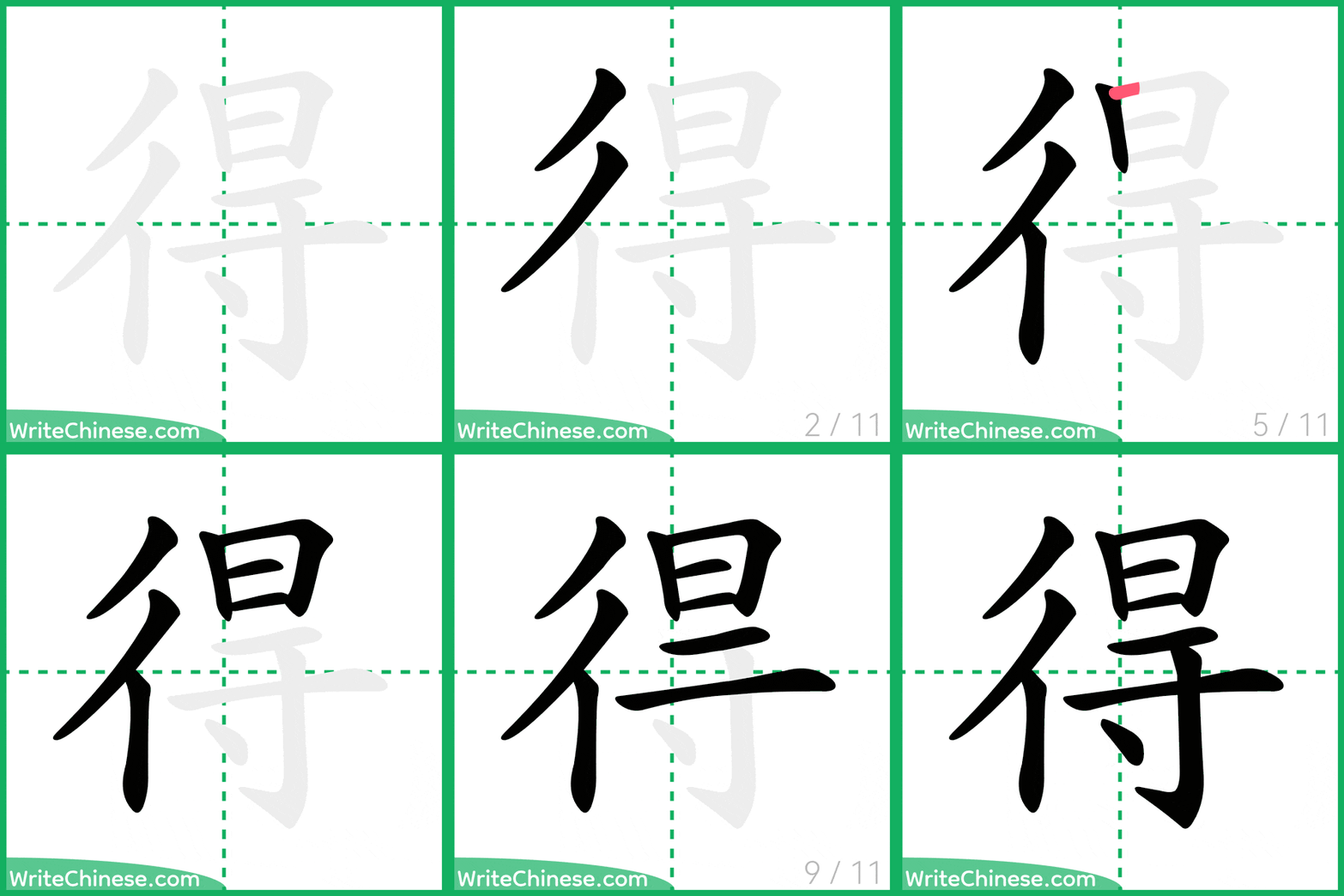
得 stroke order animation

Stroke by Stroke: 得 Writing Order

Master the Chinese character '得' stroke by stroke with visual step-by-step instructions.
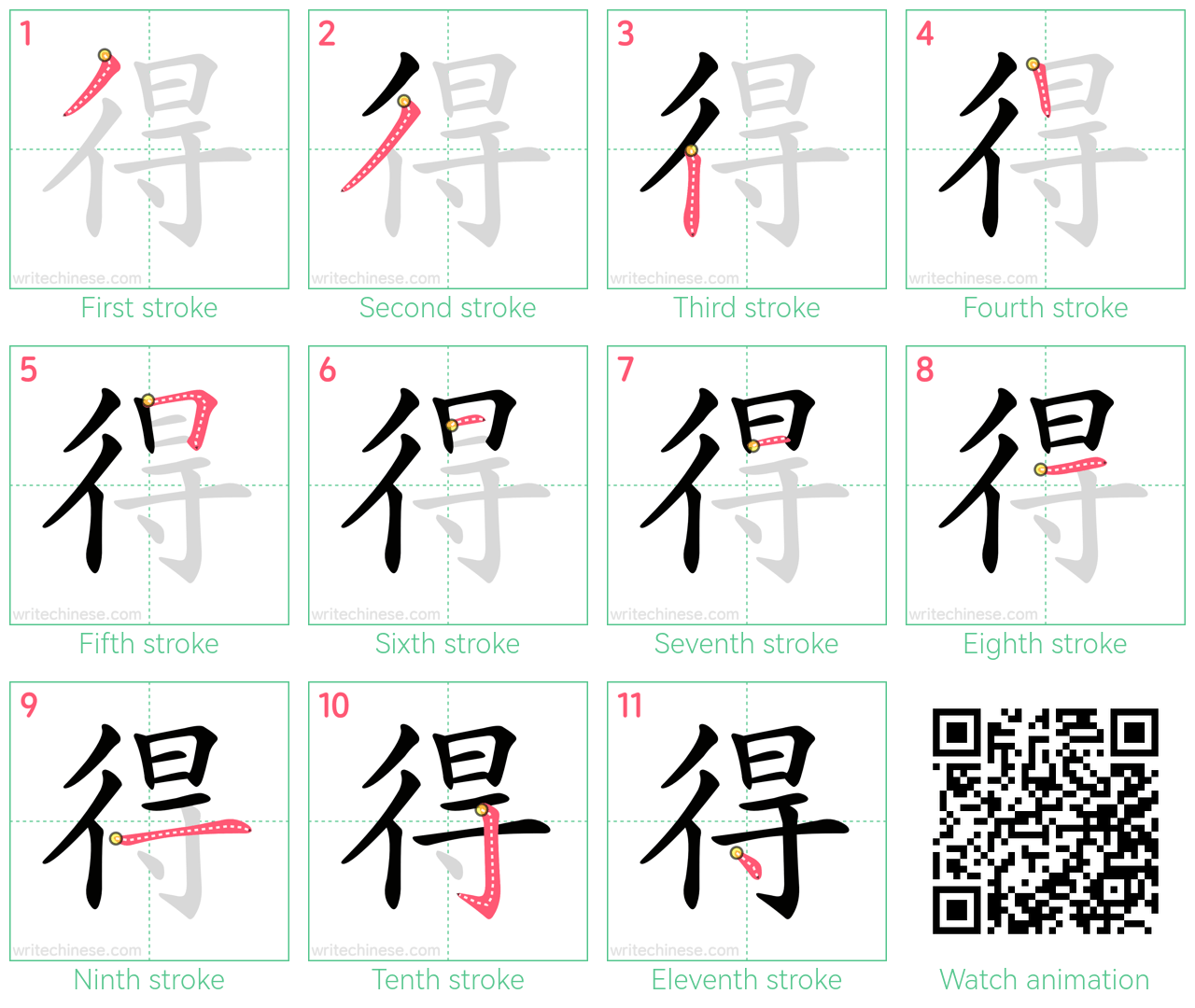
得 step-by-step stroke order diagrams

Follow the Calligraphy Master: Writing '得' Step-by-Step

Learn the proper way to write the Chinese character '得' through a video tutorial with a calligraphy teacher. Follow the Calligraphy Master's Step-by-Step Guide to Write the Chinese Character '得'. You can download the printable handwriting worksheets below and practice writing together with pen and paper.

Free Printable 得 Handwriting Practice Worksheets
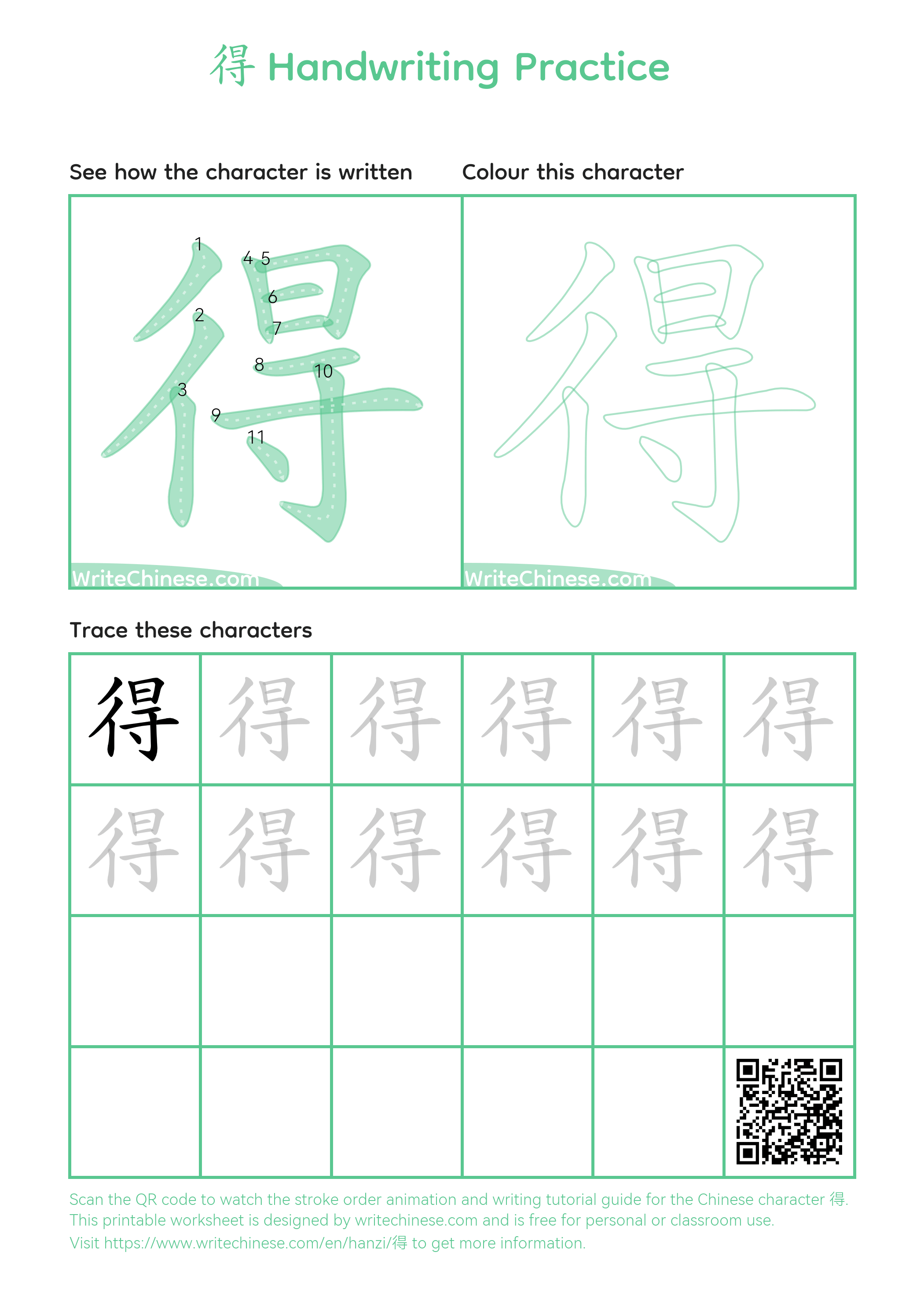
Printable Writing Practice Worksheet of "得"
Printable Handwriting Practice Worksheet of the Chinese character 得
Download the worksheet in PNG format
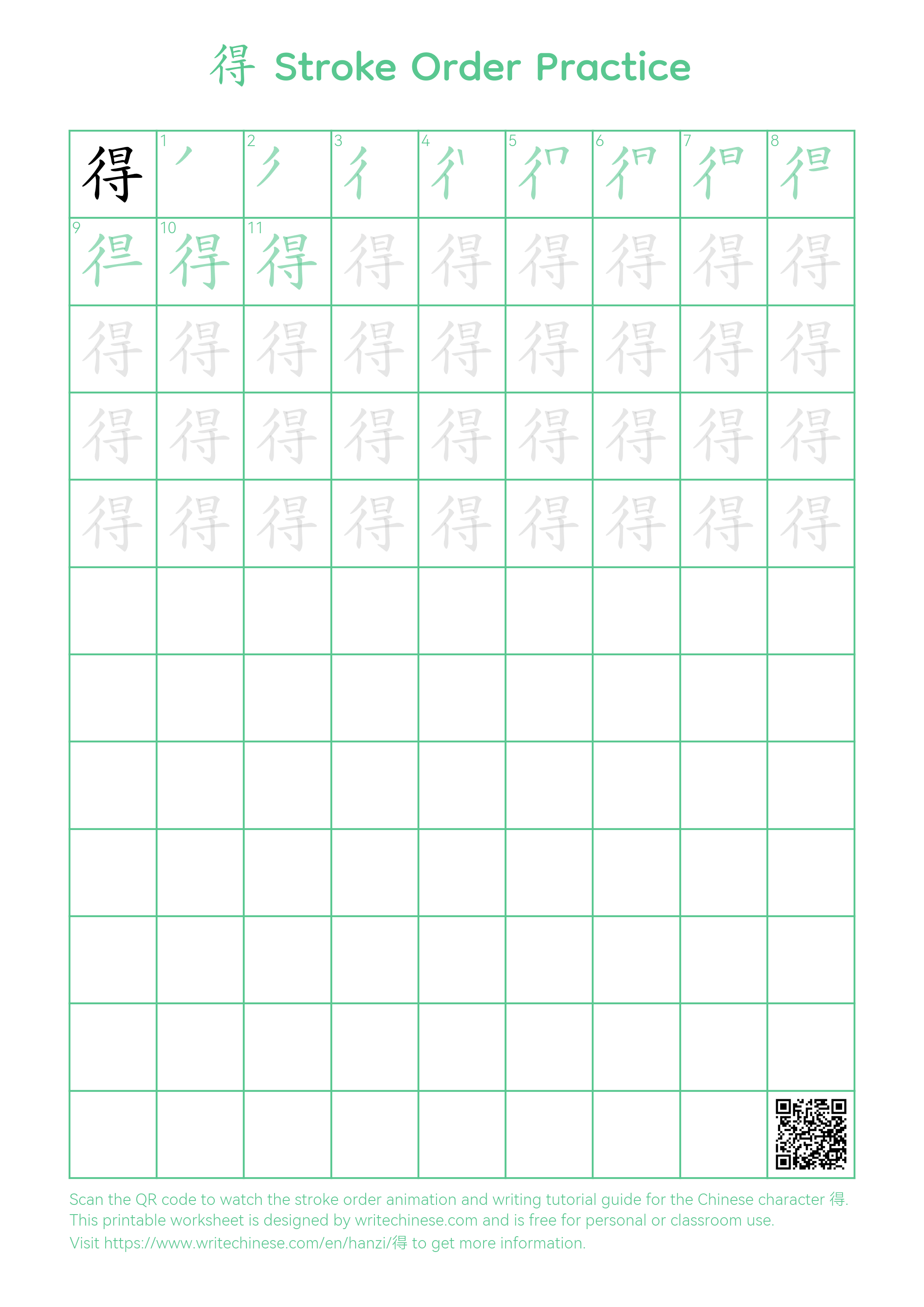
Printable Stroke Order Practice Worksheet of "得"
Printable Stroke Order Practice Worksheet of the Chinese character 得
Download the worksheet in PNG format

Meaning of 得

Pinyin dé、 děi、 de
Radical
彳
Strokes
11
Definition
obtain / get / gain / proper / suitable / proud / contented / allow / permit / ready / finished, a sentence particle used after a verb to show effect / degree or possibility, to have to / must / ought to / to need to
Usage
★★★★★
得 [dé] Meaning: 1. To get; to obtain; to gain. - Examples: 得到 (to receive), 得失 (gains and losses), 得益 (to gain benefit), 得空 (to have spare time), 得便 (to gain convenience), 得力 (to have strength), 得济 (to be benefited), 心得 (insights gained). 2. To be suitable or appropriate. - Examples: 得劲 (to suit one's strength), 得当 (to be appropriate), 得法 (to be in accordance), 得体 (to be fitting). 3. To be satisfied; to derive satisfaction. - Examples: 得意 (to be pleased), 扬扬自得 (to be self-satisfied). 4. To complete or achieve; to realize. - Examples: 饭得了 (the meal is finished), 得逞 (to succeed), 得志 (to achieve one's ambitions). 5. Can; to permit. - Example: 不得随地吐痰 (spitting in public is not allowed). 6. Colloquial (1. to express prohibition, as in “得了,别说了”; 2. to express agreement, as in “得,就这么办”). 得 [dé] (verb) - Original meaning: To obtain; to acquire. - Form: A compound character, where the right side represents wealth (贝) and the left side indicates action (彳), symbolizing gaining something through effort. Derived meanings: 1. The same as the original meaning (to obtain what was not previously owned). 2. To find. 3. To learn of; to hear about. 4. To capture. 5. Also indicates being captured or arrested. 6. To succeed; to complete. 7. To fit; to suit. 8. To possess; to have. 9. To be grateful; to express gratitude. 10. Auxillary verb, meaning can or able to. 11. Proud; satisfied. 12. To see. 得 [dé] (noun) 1. Harvest; insights gained. 2. Virtue; moral character; a virtuous person. 得 [děi] (verb) 1. Used colloquially to express necessity; must. 2. To express something that absolutely needs to be done. 3. To indicate something that is likely to occur. 得 [de] (auxiliary) 1. Used after a verb to indicate possibility. 2. Used after a verb or adjective to connect words expressing result or degree. 得 [de] (auxiliary) 1. Used after verbs to indicate capability. 2. Used between a verb and its complement to indicate possibility. 3. Used after verbs or adjectives to connect words expressing degree or result. (*From traditional dictionary explanation) - Meaning: To suffer; as in "he has committed many wrongdoings, so receiving retribution is warranted."
动辄得咎 dòng zhé dé jiù
faulted at every turn (idiom); can't get anything right
得名 dé míng
to get one's name / named (after sth)
得了吧 dé le ba
come on
得天独厚 dé tiān dú hòu
blessed by heaven (idiom) / enjoying exceptional advantages / favored by nature
来得及 lái de jí
there's still time / able to do sth in time
变得 biàn de
to become
只得 zhǐ dé
to have no alternative but to / to be obliged to
得其所哉 dé qí suǒ zāi
have got to the right place
哭笑不得 kū xiào bù dé
lit. not to know whether to laugh or cry (idiom) / both funny and extremely embarrassing / between laughter and tears
唾手可得 tuò shǒu kě dé
easily obtained / readily available
圣彼得堡 Shèng Bǐ dé bǎo
Saint Petersburg (city in Russia)
彼得堡 Bǐ dé bǎo
Petersburg (place name) / Saint Petersburg, Russia
得失 dé shī
gains and losses / success and failure / merits and demerits
夺得 duó dé
to take (after a struggle) / to wrest / to seize / to capture / to win (a trophy)
博得 bó dé
to win / to gain
贪得无厌 tān dé wú yàn
avaricious and insatiable (idiom); greedy and never satisfied
彼得格勒 Bǐ dé gé lè
Petrograd, variant spelling of 彼得堡[Bi3 de2 bao3], Saint Petersburg
得宠 dé chǒng
to be a favorite / favor
得寸进尺 dé cùn jìn chǐ
lit. win an inch, want a foot (idiom); fig. not satisfied with small gains / give him an inch, and he'll want a mile
不得已 bù dé yǐ
to act against one's will / to have no alternative but to / to have to / to have no choice / must
迫不得已 pò bù dé yǐ
to have no alternative (idiom); compelled by circumstances / forced into sth
万不得已 wàn bù dé yǐ
only when absolutely essential (idiom); as a last resort
巴不得 bā bu de
(coll.) to be eager for / to long for / to look forward to
幸得 xìng de
Fortunately
引得 yǐn dé
index (loanword)
相得益彰 xiāng dé yì zhāng
to bring out the best in each other (idiom) / to complement one another well
彼得 Bǐ dé
Peter (name)
彼得大帝 bǐ dé dà dì
Peter the Great (1682-1725, Russian emperor)
圣彼得大教堂 shèng bǐ dé dà jiào táng
St.Peter's / Saint Peter's Basilica
觉得 jué de
to think / to feel
获得 huò dé
to obtain / to receive / to get
显得 xiǎn de
to seem / to look / to appear
记得 jì de
to remember
不得不 bù dé bù
have no choice or option but to / cannot but / have to / can't help it / can't avoid
不由得 bù yóu de
can't help / cannot but
得知 dé zhī
to find out / to know / to learn about
懂得 dǒng de
to understand / to know / to comprehend
得罪 dé zuì
to commit an offense / to violate the law / excuse me! (formal) / see also 得罪[de2 zui5]
难得 nán dé
seldom / rare / hard to come by
得意 dé yì
proud of oneself / pleased with oneself / complacent
懒得 lǎn dé
not to feel like (doing sth) / disinclined to
取得 qǔ dé
to acquire / to get / to obtain
得意忘形 dé yì wàng xíng
so pleased as to lose one's sense of measure / beside oneself with joy
怡然自得 yí rán zì dé
happy and content (idiom)
怨不得 yuàn bu de
cannot blame / no wonder
怪不得 guài bu de
no wonder! / so that's why!
恨不得 hèn bu de
wishing one could do sth / to hate to be unable / itching to do sth
得悉 dé xī
to learn about / to be informed
悠然自得 yōu rán zì dé
leisurely
得愈 dé yù
Get better
所得 suǒ dé
what one acquires / one's gains
挣得 zhèng dé
to earn (income) / to make (money)
捧得 pěng dé
Hold up
晓得 xiǎo de
to know
免得 miǎn de
so as not to / so as to avoid
摘得 zhāi dé
Get
撑得住 chēng dé zhù
strong enough to prop up or support
旗开得胜 qí kāi dé shèng
lit. to win a victory on raising the flag (idiom); fig. to start on sth and have immediate success / success in a single move
既得 jì dé
vested in / already obtained / vesting
既得利益 jì dé lì yì
vested interest
既得利益者 jì dé lì yì zhě
people with vested interests
得不偿失 dé bù cháng shī
the gains do not make up for the losses (idiom)
得到 dé dào
to get / to obtain / to receive
值得 zhí de
to be worth / to deserve
欧几里得 Ōu jǐ lǐ dé
Euclid of Alexandria (c. 300 BC), Greek geometer and author Elements 幾何原本|几何原本
求得 qiú dé
to ask for sth and receive it / to try to obtain / to look for and obtain
使得 shǐ de
usable / workable / feasible / doable / to make / to cause
得以 dé yǐ
able to / so that sb can / enabling / in order to / finally in a position to / with sth in view
焉得虎子 yān dé hǔ zi
Yan De Hu Zi
得益 dé yì
to derive benefit
得益于 dé yì yú
profit from / benefit by
瞧得起 qiáo de qǐ
think much of / have high regard for / look up to / see much in
不得了 bù dé liǎo
desperately serious / disastrous / extremely / exceedingly
了得 liǎo de
exceptional / outstanding / dreadful / appalling
亏得 kuī de
fortunately / luckily / (sarcastic) fancy that, how fortunate!
所得税 suǒ dé shuì
income tax
渔翁得利 yú wēng dé lì
Fisherman profit
第聂伯罗彼得罗夫斯克 dì niè bó luó bǐ dé luó fū sī kè
dnepropetrovsk
得胜 dé shèng
to triumph over an opponent
怎么得了 zěn me dé liǎo
how can this be? / what's to be done? / what an awful mess!
乍得湖 Zhà dé Hú
Lake Chad
乍得 Zhà dé
Chad
不得 bù dé
must not / may not / not to be allowed / cannot
得饶人处且饶人 dé ráo rén chù qiě ráo rén
where it is possible to let people off, one should spare them (idiom); anyone can make mistakes, forgive them when possible
得过且过 dé guò qiě guò
satisfied just to get through (idiom); to muddle through / without high ambitions, but getting by
舍不得 shě bu de
to hate to do sth / to hate to part with / to begrudge
舍得 shě de
to be willing to part with sth
获得者 huò dé zhě
recipient
得克萨斯州 Dé kè sà sī zhōu
Texas, US state
得克萨斯 Dé kè sà sī
Texas, US state
得陇望蜀 dé Lǒng wàng Shǔ
lit. covet Sichuan once Gansu has been seized / fig. endless greed / insatiable desire
认得 rèn de
to recognize / to remember sth (or sb) on seeing it / to know
赢得 yíng dé
to win / to gain
购得 gòu dé
to purchase / to acquire
得逞 dé chěng
to prevail / to have one's way / to get away with it
适得其反 shì dé qí fǎn
to produce the opposite of the desired result
非得 fēi děi
(followed by a verb phrase, then – optionally – 不可, or 不行 etc) must
靠得住 kào de zhù
reliable / trustworthy
顾不得 gù bu de
unable to change sth / unable to deal with

Same Pronunciation Characters

Same Radical Characters

Easier Access
No need to remember the website address or type any Chinese characters. Simply scan the QR code for easier access to this page. Alternatively, you can quickly access this page by clicking to copy and paste the URL.
Input Method for 得
Pinyin de2
Wubi
tjgf
Cangjie
hoami
Zhengma
oiad
Four Corner
26241
Unicode
U+5f97
Stroke Number Category
HSK Level Category
More Languages

All Chinese stroke order images, animations, videos, and printable worksheets on this website are free for personal or classroom use. Please indicate the source and URL of the website when using them.

本网站上所有的汉字笔顺图片、动画、视频和可打印的练习材料,免费供个人或课堂使用。使用时请署名并标注引用网址。