How to write 闻
Animated Stroke Order of 闻
Learn to write the Chinese character "闻" by watching the stroke order animation of "闻".
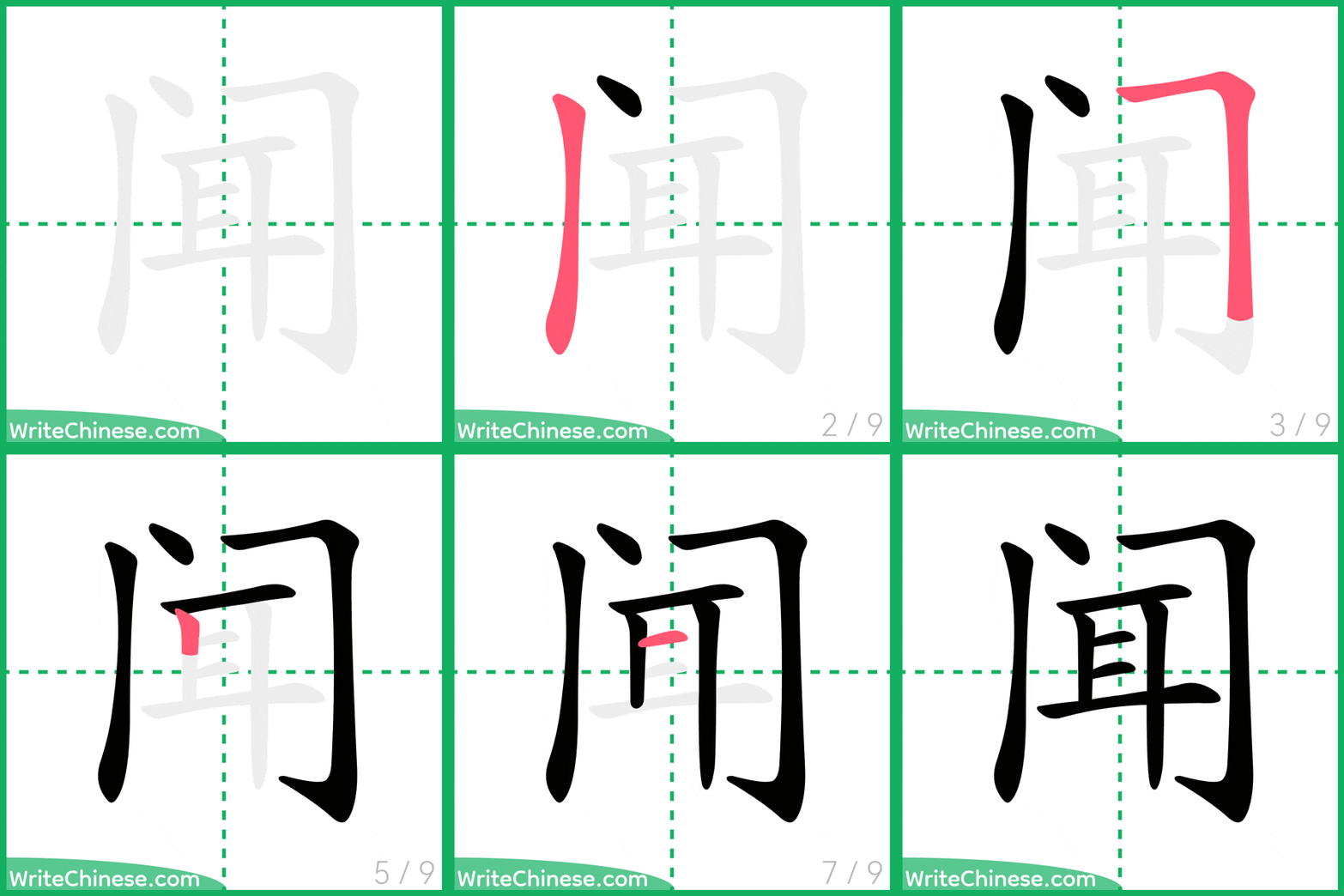
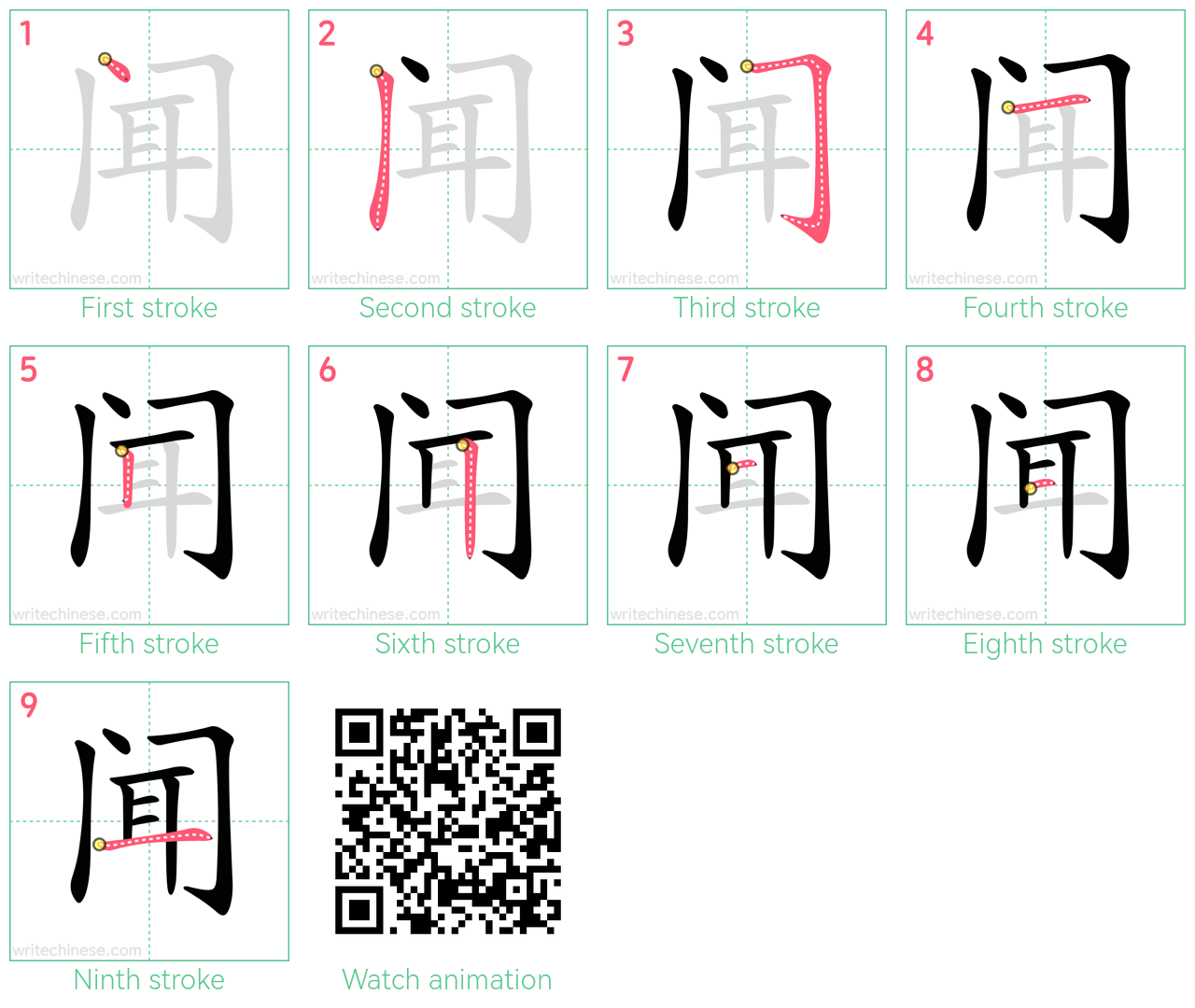
Stroke by Stroke: 闻 Writing Order
Master the Chinese character '闻' stroke by stroke with visual step-by-step instructions.
Follow the Calligraphy Master: Writing '闻' Step-by-Step
Learn the proper way to write the Chinese character '闻' through a video tutorial with a calligraphy teacher. Follow the Calligraphy Master's Step-by-Step Guide to Write the Chinese Character '闻'. You can download the printable handwriting worksheets below and practice writing together with pen and paper.
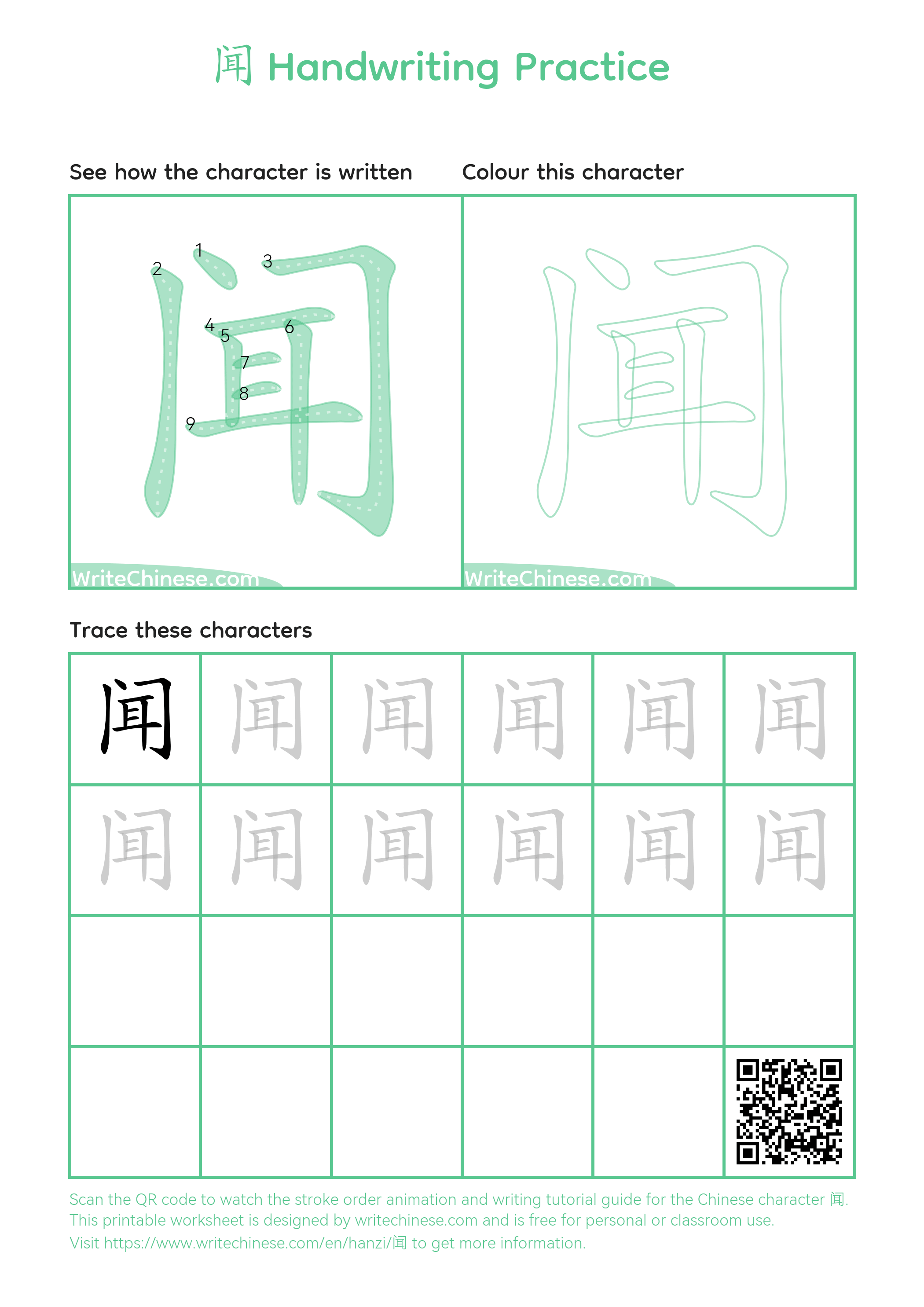
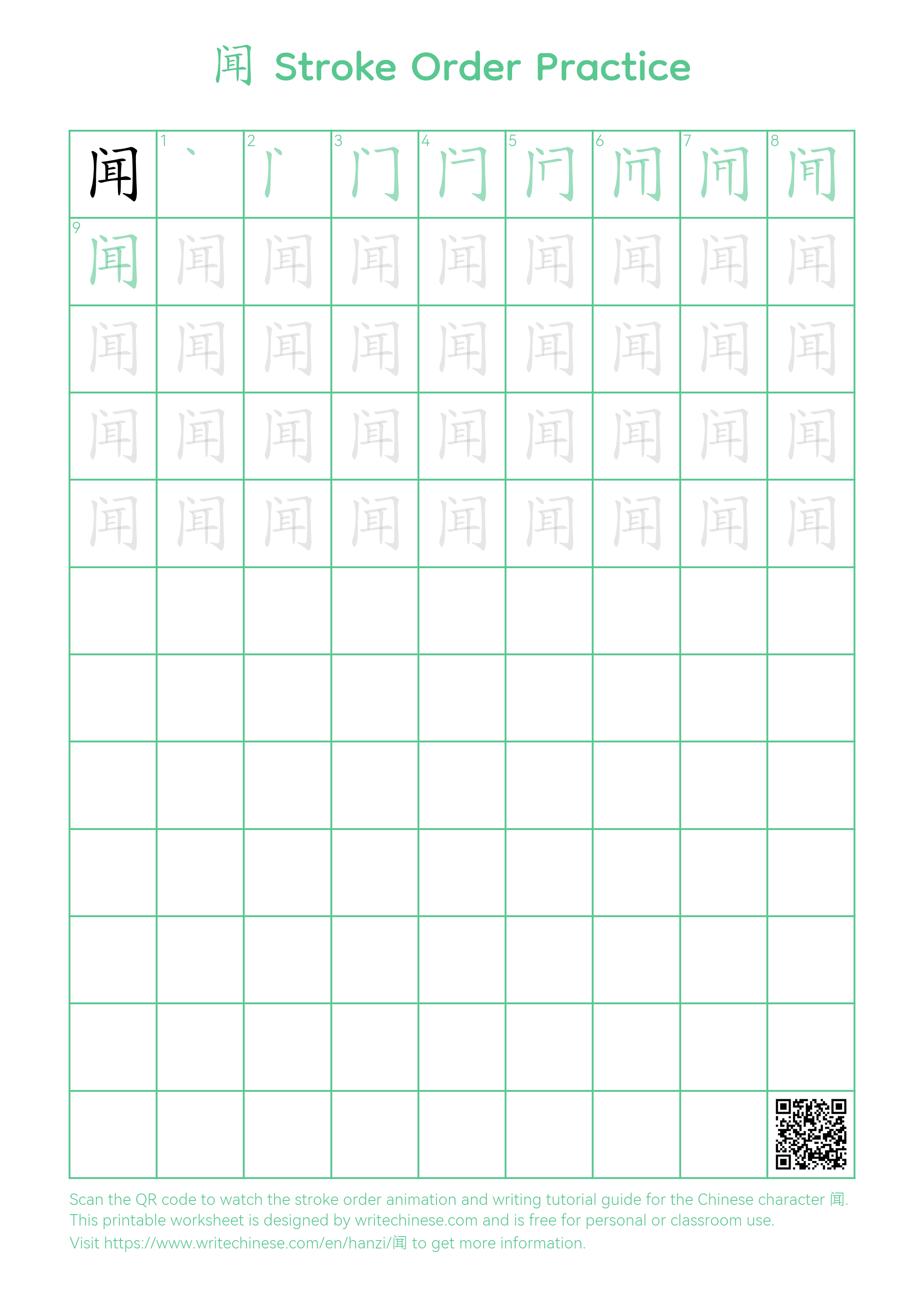
Free Printable 闻 Handwriting Practice Worksheets
Meaning of 闻
Pinyin
wén
Radical
门
Strokes
9
Definition
(surname) / hear / sniff at
Usage
★★★★★
闻
wén
1. 听见。
hear.
2. 听见的事情,消息。
information; news heard.
3. 出名,有名望。
well-known; reputable.
4. 名声。
reputation; fame.
5. 用鼻子嗅气味。
smell; to sniff.
6. 姓。
a surname.
闻 (verb)
本义: 听到
Original meaning: to hear.
造字法: 形声。从耳,门声。
Character formation: Phono-semantic; depicting ear and sound.
1. 同本义 (En: hear)
Same as the original meaning.
引
References:
1. 《说文》: 闻,知声也。
"To hear is to know sound."
2. 《墨子经上》: 闻耳之聪也。
"Hearing is the cleverness of the ear."
3. 《礼记·大学》: 心不在焉,视而不见,听而不闻。
"If the heart is not present, one sees but does not see, hears but does not hear."
4. 屈原《九歌·湘夫人》: 闻佳人兮召予。
"I heard the beauty calling me."
5. 《史记·项羽本纪》: 夜闻汉军四面皆楚歌。
"That night I heard the Han army surrounded by Chu songs."
6. 《后汉书·列女传》: 妾闻志士不饮盗泉之水。
"I have heard that the righteous do not drink from stolen springs."
例
Example usages:
1. 闻声不食 (hear the call and refrain from eating it).
2. 闻所不闻 (to hear what has never been heard).
3. 闻风响应 (to respond immediately upon hearing the wind).
4. 闻雷失箸 (to feign ignorance by borrowing an unrelated event).
5. 闻鸡起舞 (to rise to action upon hearing the comet; metaphor for taking timely action).
2. 听说;知道 (En: be told; know)
To be informed or to know.
引:
1. 《孟子·滕文公上》: 闻君行仁政。
"I heard that the ruler practices benevolent governance."
2. 唐· 韩愈《师说》: 其闻道也。
"He has heard the teachings."
例
Example usages:
1. 闻问 (to inquire or receive news).
2. 闻道 (to be enlightened about truth).
3. 闻说 (to have heard).
4. 闻知 (to learn or to know).
3. 接受 (En: accept)
To accept.
例
Example usages:
1. 闻教 (to receive teachings).
2. 闻命 (to accept orders).
4. 传布,传扬 (En: propagate)
To disseminate; to promote.
引:
1. 王维《老将行》: 贺兰山下阵如云,羽檄交驰日夕闻。
"As the troops gather like clouds at the Helan Mountains."
例
Example usage:
1. 闻诵 (to spread and to praise).
5. 报告上级 (En: report)
To report to superiors.
例
Example usage:
1. 闻达 (to report to the emperor).
6. 趁,乘 (En: take advantage of)
To take advantage of.
例
Example usage:
1. 闻早 (to seize an early opportunity).
7. 闻名,出名 (En: well-known)
To be well-known.
引:
1. 《史记·魏公子列传》: 名闻天下。
"His name is known throughout the world."
8. 嗅;嗅到 (En: smell)
To sniff; to perceive a smell.
引:
1. 《孔子家语·六本》: 与善人居,如入芝兰之室,久而不闻其香,即与之化矣。
"Living with good people is like entering a room of orchids; even if one cannot smell their fragrance, one becomes like them."
9. 通“问”。询问;问候 (En: inquire; extend greetings to)
To ask; to greet.
引:
1. 《易·旅象》: 丧牛之凶,终莫之闻也。
"When the cow is lost, no one has heard of it."
闻 (noun)
1. 知识;见闻 (En: knowledge)
Knowledge and experience.
引:
1. 《庄子·秋水》: 且夫我尝闻少仲尼之闻而轻伯夷之义者,始吾弗信。
"I once heard of the knowledge of Confucius and doubted the righteousness of Bo Yi."
例
Example usage:
1. 闻见 (experience and knowledge).
2. 传闻,听到的事情;消息 (En: information)
Information; news.
引:
1. 《吕氏春秋·慎行论》: 求闻之若此。
"Seeking information like this."
例
Example usages:
1. 新闻 (news); 2. 趣闻 (interesting anecdotes).
3. 声望;威望 (En: popularity; prestige)
Reputation and prestige.
引:
1. 《诗·大雅·卷阿》: 令闻令望。
"To have a good reputation and prestige."
例
Example usages:
1. 闻达 (to be well-regarded); 2. 秽闻 (bad reputation).
obscure and unknown (idiom); an outsider without any reputation / a nobody / an unknown quantity
Same Pronunciation Characters
Same Radical Characters
Easier Access

No need to remember the website address or type any Chinese characters. Simply scan the QR code
for easier access to this page. Alternatively, you can quickly access this page by clicking to
copy and paste the URL.
Input Method for 闻
Pinyin
wen2
Wubi
ubd
Cangjie
lssj
Zhengma
tlce
Four Corner
37401
Unicode
U+95fb
Stroke Number Category
HSK Level Category